⏱ Reading time: 7 min | Topics covered: Layout ideas, tile selection, sizing, color, cost…
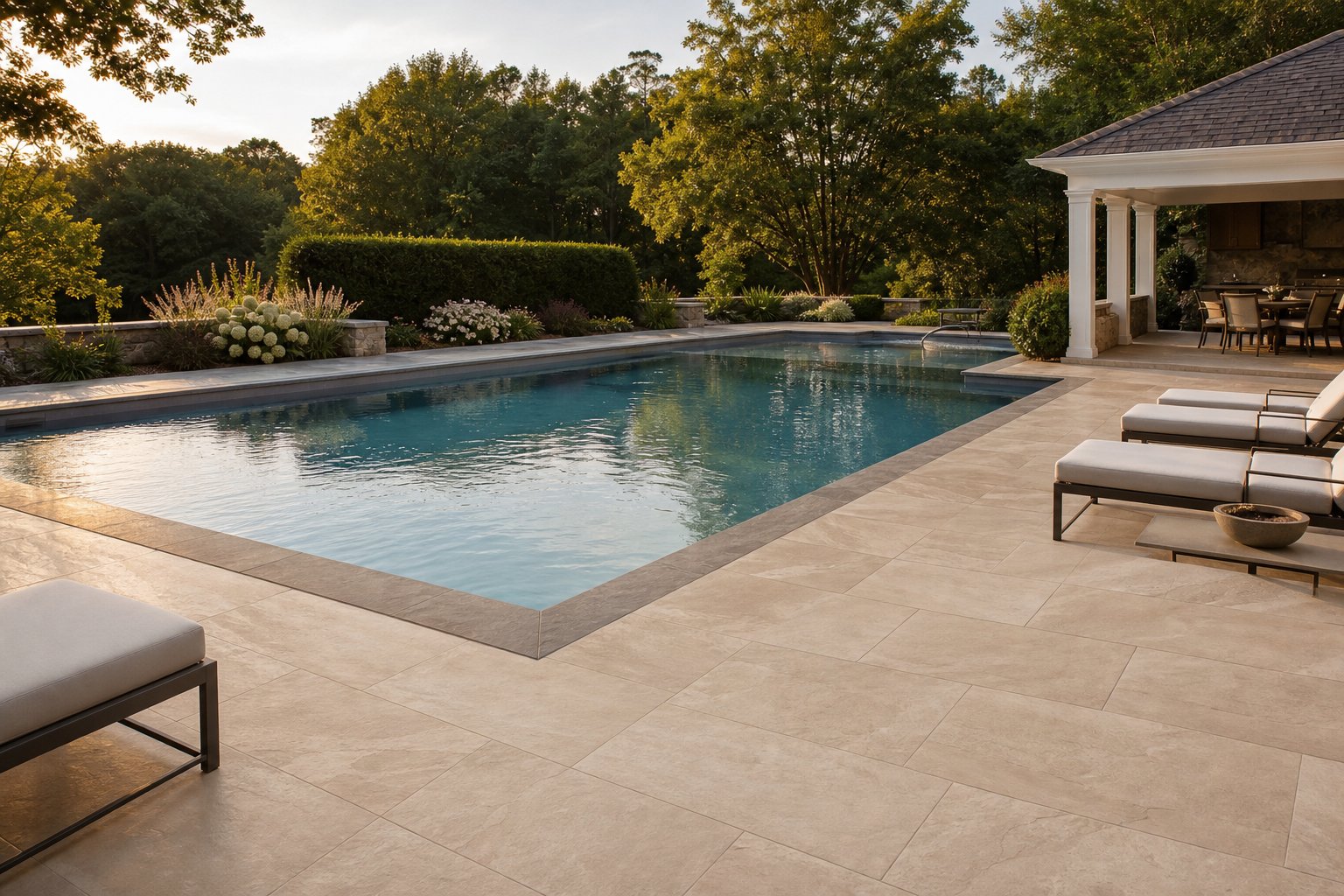
Pool Deck & Pool Surround Tile: A Chester County Homeowner’s Guide
Summer in Chester County means backyard gatherings, weekend swims, and long afternoons spent lounging beside the pool. But nothing undermines that experience faster than a pool deck that’s dated, cracked, or dangerously slippery. The right tile transforms a functional concrete slab into an inviting outdoor retreat — and with the right guidance, it holds up beautifully through Pennsylvania’s freeze-thaw winters, too.
At Milford Mills Tile, we’ve helped Chester County and Delaware County homeowners design and install pool surrounds and pool decks that are as safe and durable as they are beautiful. This guide covers everything you need to know: from tile selection and slip ratings to layout options and maintenance tips.
Why Tile Is the Premier Choice for Pool Surrounds
Pool decks take a beating. They’re exposed to UV rays, chlorinated water, bare feet, patio furniture, and Pennsylvania’s wide seasonal temperature swings. Many homeowners start with poured concrete or pavers — and end up calling us a few years later when surfaces have cracked, stained, or become uncomfortably hot underfoot.
Properly installed tile offers several advantages over competing materials:
- Non-porous surface: Glazed porcelain and glass tile resist chemical absorption from pool water and cleaning products, preventing the staining that plagues unsealed concrete.
- Temperature regulation: Light-colored porcelain reflects heat rather than absorbing it — a major comfort advantage over dark concrete or rubber surfaces in July.
- Longevity: A quality porcelain tile installation, properly set and grouted, can last 20–30 years. That far exceeds the lifespan of stamped concrete sealers or composite decking.
- Customization: Tile gives you full design control. You can match the aesthetic of your home’s exterior, coordinate with your pool interior finish, or create something entirely unique.
- Resale appeal: In the Chester County and Main Line real estate market, a well-designed outdoor living space — especially one with a tile pool surround — adds measurable curb appeal and buyer interest.
The Most Important Spec: Slip Resistance (COF Rating)
If there’s one spec that matters more than any other for pool deck tile, it’s the coefficient of friction (COF). This rating measures how much grip a tile surface provides underfoot when wet. The industry standard for wet, barefoot areas like pool decks is a minimum COF of 0.60 — and many designers and safety professionals recommend 0.65 or higher for areas with high foot traffic.
Tiles marketed as “slip-resistant” aren’t all created equal. Here’s what to look for:
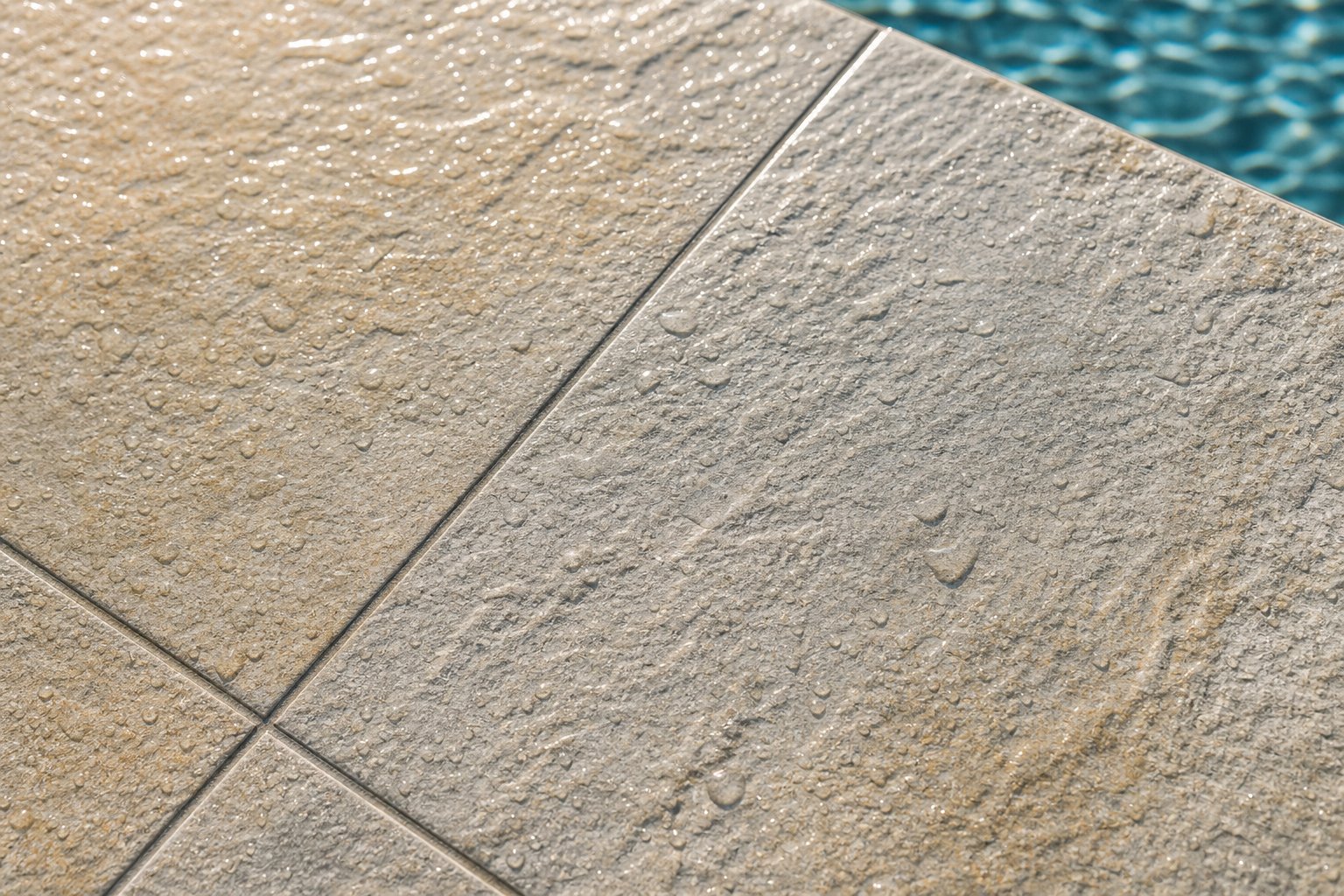
- Textured porcelain: Most common choice for pool decks. A matte or slightly textured finish provides excellent grip without sacrificing style. Look for rectified tiles in the 12×24 or 16×16 format for a clean, modern aesthetic.
- Brushed natural stone: Travertine and limestone with a brushed (not polished) finish can work well around pools, but require sealing and more rigorous maintenance in our climate.
- Anti-slip treated tile: Some manufacturers apply anti-slip coatings or create micro-texture surfaces specifically rated for pool use. Ask your installer for pool-rated product lines.
- Avoid: Polished stone, high-gloss porcelain, and any smooth-faced tile with a COF below 0.50 — these become dangerously slippery when wet.
Frost Resistance: The Chester County Factor
Unlike pool installations in Florida or Arizona, outdoor tile in Chester County PA faces one of the most punishing tile-killer environments in the country: the freeze-thaw cycle. When water infiltrates a tile or its substrate and freezes, it expands — and that expansion cracks grout, pops tiles, and can heave an entire installation.
For outdoor and pool deck use in our region, you must use frost-resistant porcelain with a water absorption rate below 0.5% — technically called “impervious” tile. Standard ceramic tile and even some porcelains are rated “vitreous” (0.5–3% absorption) and should not be used outdoors in Pennsylvania.
The installation process matters just as much as the tile itself. Our team uses:
- Polymer-modified thinset rated for exterior and freeze-thaw environments
- Flexible, sanded grout (not standard unsanded grout, which is prone to cracking under thermal movement)
- Proper expansion joints every 8–10 feet to allow for natural movement
- Waterproof membrane on the substrate to prevent moisture infiltration
Skipping any of these steps is the reason so many DIY and low-bid pool tile jobs fail within 2–3 winters. The climate demands the right materials and the right installation method — full stop.
Pool Coping: Where Tile Meets the Water
Pool coping — the cap that runs along the edge of the pool wall — is one of the most visible design elements of your pool surround, and it’s also one of the most demanding from an installation standpoint. It must cantilever slightly over the pool edge, handle constant splashing and chemical exposure, and still look polished from every angle.
Popular coping options for tile-edged pools include:
- Bullnose porcelain: Tiles with one finished, rounded edge that wrap the pool lip cleanly. Works well for a seamless look when the deck and coping use the same tile.
- Natural stone coping: Bluestone, travertine, or limestone cut into coping slabs. Gives a classic, upscale look that pairs beautifully with pool tile accents on the waterline.
- Precast concrete with tile insets: Cost-effective option for larger pools, with tile accent strips added for style.
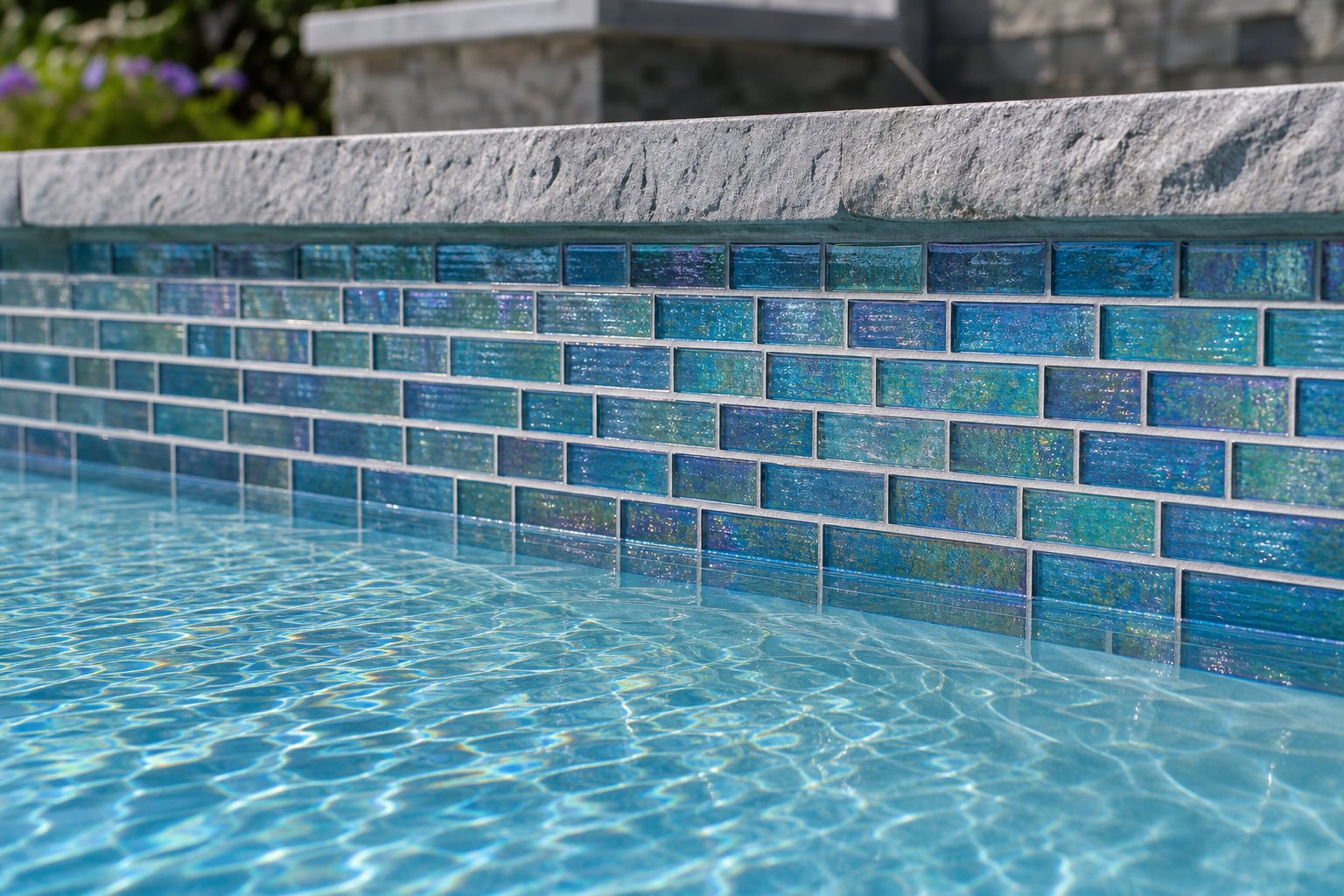
Many Chester County homeowners choose to tile the coping in the same material as their deck for a cohesive look, then add a waterline tile accent band — a 6-inch strip of glass or mosaic tile just at the waterline inside the pool — for a high-end resort feel.
Design Styles That Work Beautifully Around Chester County Pools
Your pool surround is an extension of your home’s architecture. Here are the design directions we see most often — and the tile choices that make them work:
Classic Pennsylvania Stone
If your home features the fieldstone or limestone exterior typical of Chester County’s historic properties, an earthy travertine or sand-toned porcelain deck carries that palette outdoors. Pair with a cobalt or teal glass tile waterline band for a subtle pop of color that complements the natural stone.
Modern Minimalist
Large-format light grey or warm white porcelain in 24×24 or 24×48 format creates a seamless, hotel-inspired look. Thin grout lines (using rectified tile) maximize the visual open-space effect. This pairs well with modern pool shapes — rectangular with clean lines and an infinity edge.
Mediterranean / Tuscan
Warm terracotta-toned porcelain (which offers all the durability benefits of porcelain without the maintenance demands of real terracotta), tumbled-edge stone coping, and a mosaic waterline band in a Mediterranean pattern. This style is popular in the more traditionally styled neighborhoods of West Chester and Malvern.
Transitional / Timeless
Neutral sand or greige textured porcelain, subtle wood-look plank tiles on a covered patio area, and simple white or grey mosaic waterline tile. This is the most versatile option and tends to age the best across design trends.
Common Pool Deck Tile Mistakes (and How We Avoid Them)
Over the years, we’ve been called in to fix pool deck installations that failed — sometimes after just one winter. The most common issues we see:
- Using interior tile outdoors: The #1 mistake. Beautiful tile that looks great inside the showroom isn’t rated for outdoor freeze-thaw conditions. Always verify the frost rating before purchasing.
- Incorrect slope and drainage: Pool decks must slope away from the pool edge (typically 1/8″ per foot) for proper drainage. Tile laid flat holds water, which accelerates freeze-thaw damage and creates slip hazards.
- Skipping expansion joints: Thermal movement is real. Without expansion joints, tile installations crack — it’s not a question of if, but when.
- Improper substrate prep: Tile is only as stable as what’s underneath it. Cracked or unlevel concrete must be addressed before tile goes down, not after.
- Grouting over movement joints: Expansion joints should be filled with a color-matched caulk, never grout. Grout is rigid and will crack under movement.
At Milford Mills Tile, our tile installation process begins with a thorough substrate assessment. We don’t cut corners on prep — it’s the foundation of every installation that lasts decades rather than years.
Maintenance: Keeping Your Pool Deck Tile Looking Great
One of tile’s biggest advantages is how easy it is to maintain compared to wood decking, rubber pavers, or stamped concrete. A few simple habits keep your pool surround looking great:
- Rinse weekly: A simple rinse with a garden hose removes chlorine residue and prevents buildup. Do this more frequently in heavy-use summer periods.
- Annual grout inspection: Check grout lines each spring for cracks or deterioration, especially around the pool edge and in expansion joints. Small cracks let water in — address them promptly.
- Avoid harsh chemicals: Standard pool deck cleaners work well, but avoid highly acidic or abrasive cleaners on grout. For stubborn staining, a pH-neutral tile cleaner is your safest option.
- Winter prep: Clear the deck of furniture and accessories before sustained freezing temperatures. Ensure drains are clear so standing water doesn’t sit on the surface through a hard freeze.
- Natural stone needs sealing: If you’ve used travertine or limestone coping, plan to reseal every 2–3 years to maintain stain and moisture resistance.
Planning Your Pool Deck Tile Project
Most pool deck tile projects in Chester County take 5–10 days from start to finish, depending on the size of the surround and whether coping replacement is included. Here’s the general sequence:
- Substrate assessment and any needed concrete repair
- Waterproof membrane application on vertical and splash areas
- Layout planning and dry-fit to confirm pattern and cut lines
- Thinset application and tile setting (typically 2–4 days for a standard pool)
- Grouting and expansion joint caulking (allow 24–48 hours cure time before foot traffic)
- Final inspection and sealant application where applicable
Timing matters in Pennsylvania — late spring through early fall is ideal. We avoid setting outdoor tile when temperatures are expected to drop below 40°F within 24 hours of installation, as cold temperatures interfere with proper thinset cure.
Ready to Transform Your Pool Area?
Whether you’re building a new pool, resurfacing a worn deck, or adding tile accents to a concrete surround, Milford Mills Tile brings the expertise and attention to detail that Chester County homeowners expect. We serve West Chester, Malvern, Paoli, Downingtown, Exton, and communities across Chester County and Delaware County.
Browse our past projects on our portfolio page to see completed pool surrounds, outdoor patios, and more. When you’re ready to discuss your project, contact us for a free consultation — we’ll walk you through your tile options, help you plan the layout, and give you a clear, detailed estimate.
Your pool deserves a surround that’s as beautiful as the home it belongs to. Let Milford Mills Tile make it happen.
Related Posts