Summer in Chester County means backyard gatherings, weekend swims, and long afternoons spent lounging beside…
Powder Room Tile Ideas for Chester County PA Homes
Quick Summary
- Powder rooms are small but high-impact — the right tile choice dramatically elevates your home’s impression.
- Bold patterns, floor-to-ceiling tile, and dramatic accent walls all work beautifully in a powder room because the space is small.
- Chester County homes near Malvern, West Chester, and Bryn Mawr favor classic marble-look porcelain, warm stone tones, and transitional designs.
- Professional installation is critical for detail-heavy powder room tile work — grout lines, pattern alignment, and waterproofing matter at this scale.
- Milford Mills Tile serves Chester County, Delaware County, and the Main Line with expert tile installation.
Your powder room may be the smallest room in your Chester County home, but it makes a disproportionately large impression. It’s often the first room guests use, and it’s one of the few spaces where you can go truly bold with tile — because the square footage is so manageable. At Milford Mills Tile, we’ve installed powder room tile throughout Malvern, West Chester, Bryn Mawr, and communities across Chester County PA for over a decade, and we consistently see this small space deliver the biggest “wow” factor per square foot.
Whether you’re renovating an existing half-bath off your foyer or finishing a new build, the right powder room tile ideas can transform a purely functional space into a design showpiece. This guide walks you through our favorite approaches, current trends, and the installation considerations that separate a lasting result from one that chips, cracks, or disappoints within a few years.
Why Powder Rooms Are a Tile Designer’s Dream
Powder rooms — also called half-baths — typically run between 15 and 35 square feet. That compact size is actually a gift when it comes to tile design. Here’s why:
- Lower material costs — Even premium porcelain or natural stone remains affordable at powder room scale. A $15/sq ft tile that would cost $3,000 in a master bath might run under $600 for a powder room floor and wainscoting.
- Room to be daring — Bold patterns, deep colors, and dramatic textures that might feel overwhelming in a large space look intentional and sophisticated in a small one.
- Minimal maintenance complexity — Powder rooms don’t have showers or full bathtubs, so waterproofing requirements are more straightforward than a full bath remodel.
- High resale value — According to Zillow research, updated bathrooms — including half-baths — rank among the top renovation ROI drivers for Main Line and Chester County homes.
In our experience serving homeowners throughout Delaware County and Chester County, powder rooms that receive thoughtful tile treatment often become the most-photographed rooms in home listings and the most-commented-on rooms at dinner parties.
Top Powder Room Tile Ideas for Chester County Homes
These are the designs we install most frequently — and the ones that generate the most calls asking “what tile is that?”
1. Floor-to-Ceiling Marble-Look Porcelain
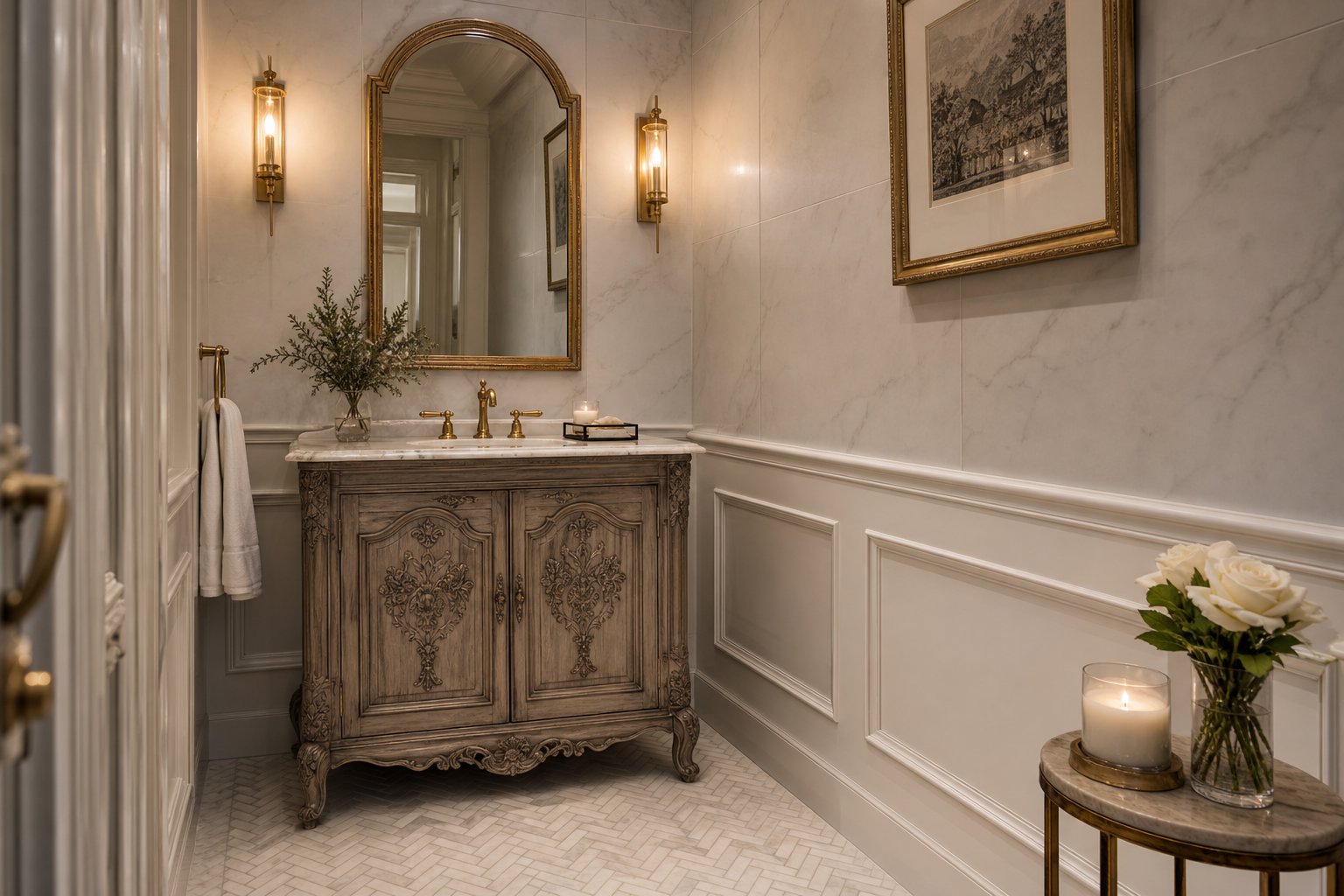
Running large-format marble-look porcelain from floor to ceiling with minimal grout lines creates a seamless, spa-like effect that photographs beautifully. We love this look in West Chester colonials and Malvern ranches. Rectified 12×24 or 24×48 slabs in Calacatta or Statuario patterns are perennial favorites.
2. Dramatic Black Hex Mosaic Floor
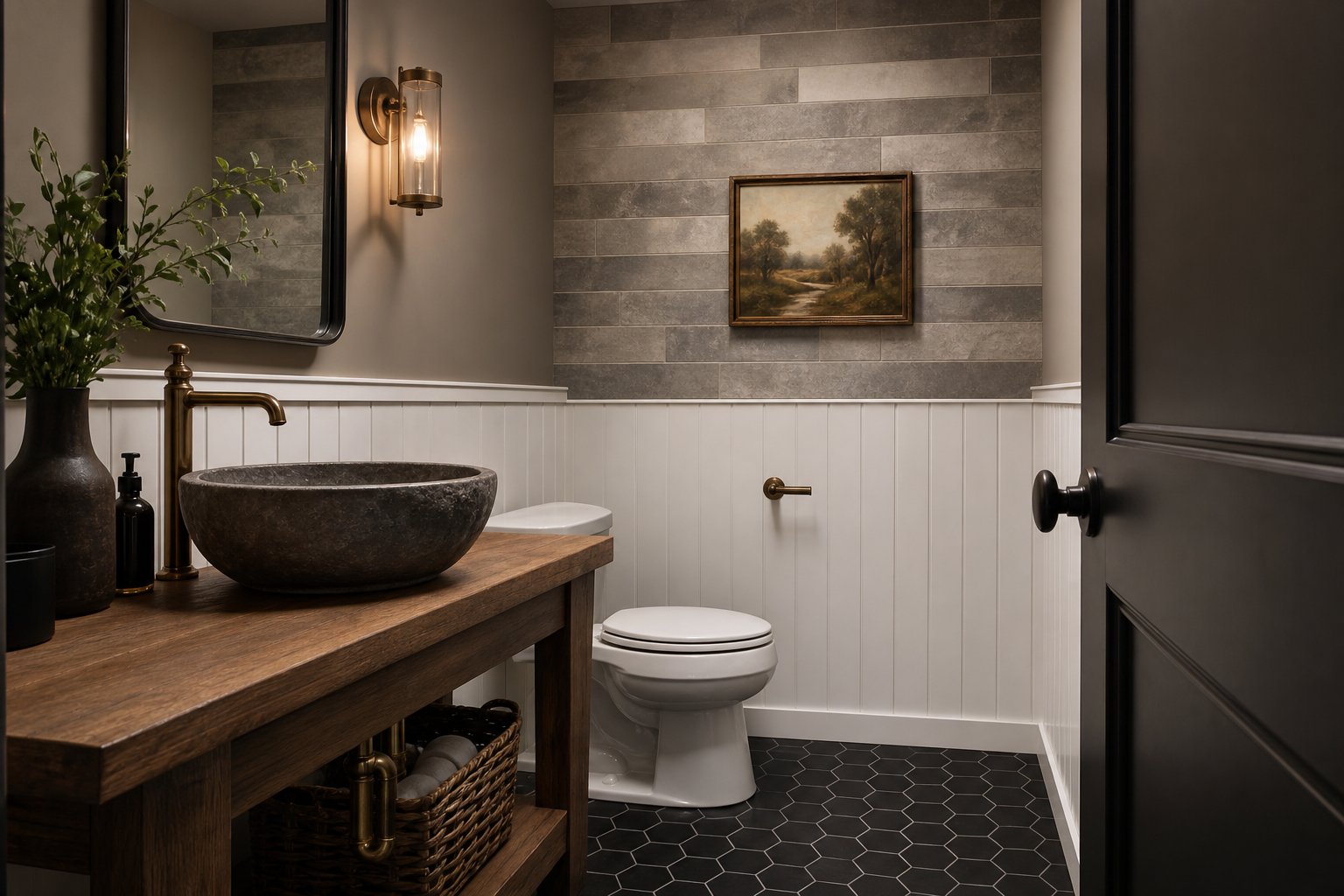
A bold black hexagon mosaic floor against white subway or shiplap-look wall tile is a classic combination that feels fresh and editorial. The contrast is striking, especially when paired with brushed bronze or matte black fixtures — a pairing that’s hugely popular in Bryn Mawr and Haverford renovations right now.
3. Geometric Encaustic-Look Cement Tile
Encaustic cement tile patterns — or the porcelain versions that mimic them — bring a handcrafted, artisanal quality that suits the historic architecture common throughout Chester County. Moroccan, quatrefoil, and star-and-cross patterns add personality without requiring a full renovation every few years.
4. Zellige-Inspired Wall Tile
Zellige tile (handmade Moroccan glazed terracotta) and its glazed ceramic counterparts create an irregular, jewel-like surface that catches light beautifully. For Chester County powder rooms, we typically recommend a soft sage, warm ivory, or dusty blue zellige-look tile for the feature wall behind the vanity.
5. Herringbone Wainscoting with a Statement Floor
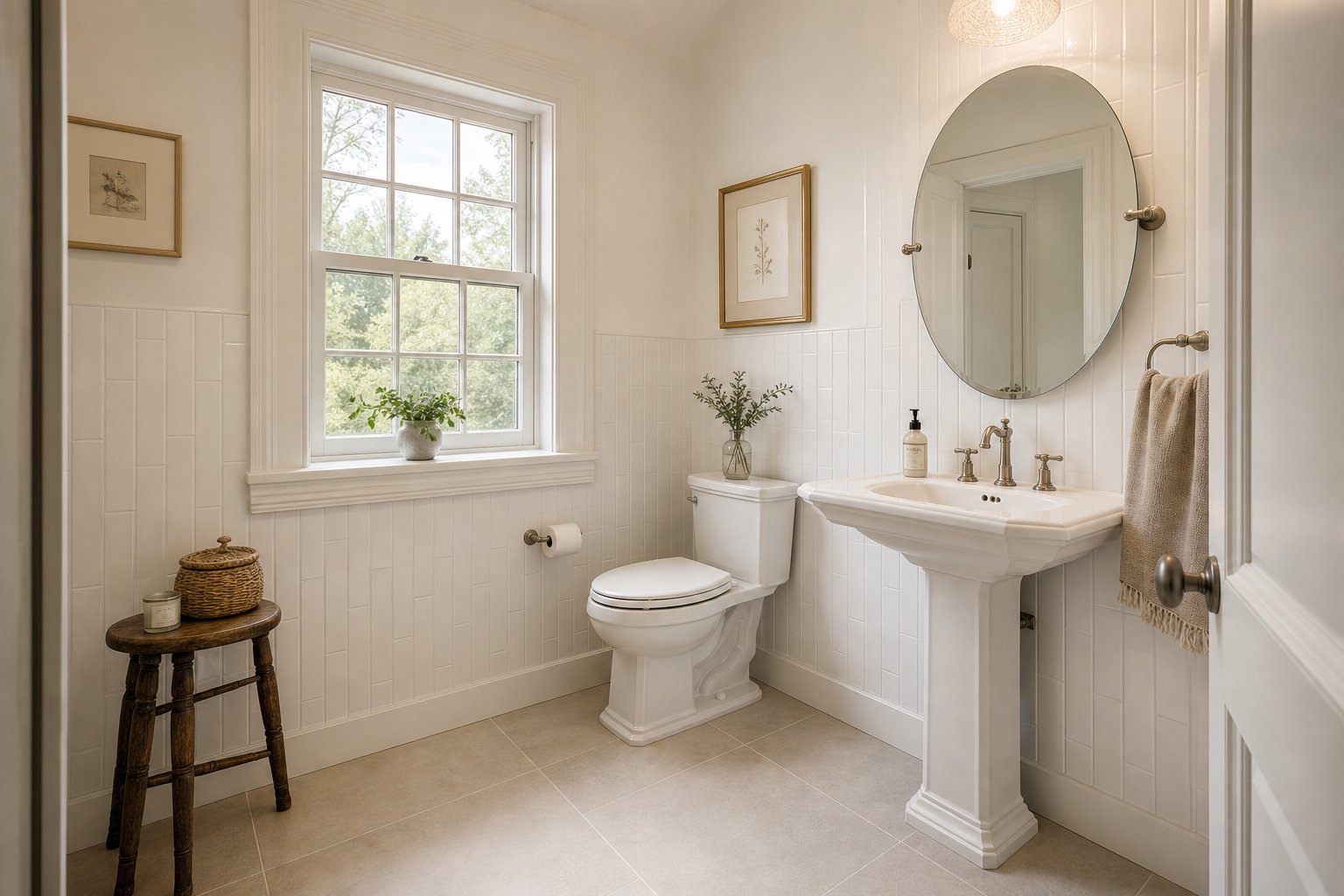
Combining herringbone subway tile wainscoting (typically 36–48 inches high) with a patterned or contrasting floor tile creates architectural interest at every sightline. This transitional look bridges the older colonial architecture common near Route 30 and the Wayne/Paoli corridor with modern interior sensibilities.
6. Wood-Look Tile for Warmth
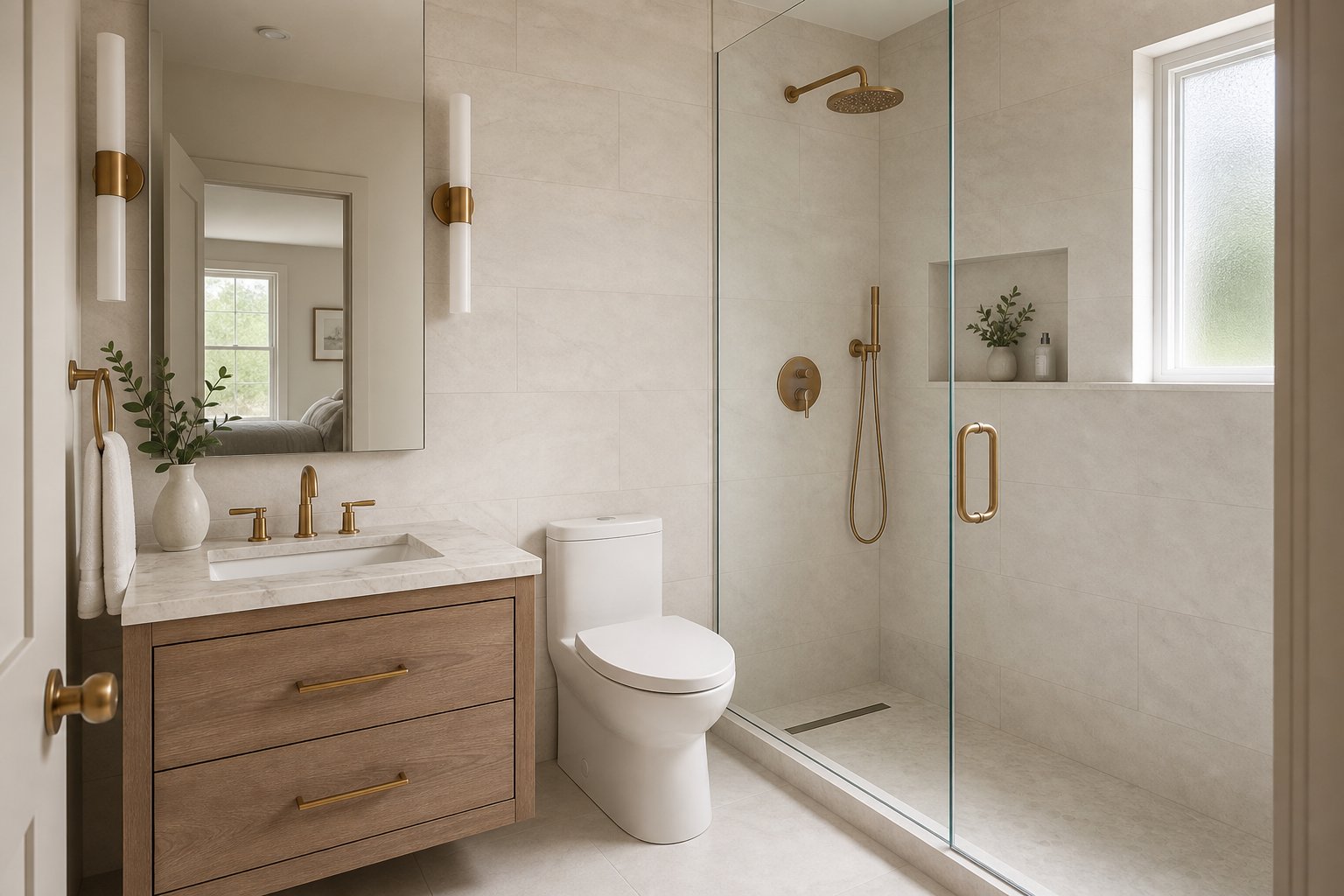
For homeowners who want warmth without the maintenance of real wood in a bathroom, 6×36 or 4×24 wood-look porcelain planks in a warm walnut or whitewashed oak finish deliver exactly that. Pair with a white wall tile and warm brass fixtures for a livable, timeless result.
Choosing the Right Floor Tile
Floor tile in a powder room needs to balance aesthetics with practicality. Here are the non-negotiable considerations our Chester County installation team walks every client through:
Slip Resistance
Powder rooms see wet feet, spilled water, and kids running through. The Porcelain Enamel Institute (PEI) rates tile hardness; for floors, aim for PEI 3 or higher. For slip resistance, look for a Coefficient of Friction (COF) rating of 0.42 or above — the ADA standard for wet conditions. Highly polished marble-look tiles can be slippery when wet; a matte or honed finish improves safety significantly.
Grout Joint Size Matters
Smaller grout joints (1/16″ to 1/8″) on large-format tile create a cleaner, more seamless look. Mosaic tiles require larger grout joints and more grout overall — which means more maintenance over time. We typically recommend an epoxy or unsanded grout for floors with tight joints, as it’s more stain-resistant and durable than traditional cement-based grout.
Pattern and Scale
In small spaces, tile scale matters. Very large tiles (24×24 and above) can feel disproportionate in a 20-square-foot powder room floor. We generally recommend 12×12 to 18×18 for a clean, balanced look, or mosaic tiles (1″ to 4″) for pattern-forward designs. The exception is when you’re going floor-to-ceiling with the same tile — in that case, consistency of scale creates intentionality.
Wall Tile Strategies That Make a Statement
Unlike a shower, powder room walls don’t require waterproofing membrane behind the tile — but they still benefit from moisture-resistant drywall (sometimes called “green board”) as a substrate. Our tile installation process for Chester County powder rooms always starts with proper substrate prep before we set a single tile.
Full-Wall Tile vs. Wainscoting
Full-wall tile — covering the entire wall surface from floor to ceiling — creates a bold, dramatic effect and is particularly popular in newer Exton and Downingtown homes with higher ceilings. Wainscoting (tiling the lower 36–48 inches) with painted plaster or wallpaper above is the more traditional choice and works beautifully in Berwyn and Paoli colonials.
Accent Wall Focus
If budget is a consideration, concentrating your most statement-making tile on a single accent wall — typically the wall behind the vanity or toilet — is a smart approach. A 12–16 square foot accent wall allows for a premium tile (think hand-painted Talavera, textured 3D tile, or bookmatched stone) without the cost of full coverage.
Tile Height and Ceiling Perception
Vertical tile orientations and floor-to-ceiling coverage make low ceilings feel taller. Horizontal patterns and wainscoting cap heights emphasize width. In many of the older Chester County homes near Route 202 and Phoenixville, ceiling heights in half-baths can be 7’6″ or lower — vertical patterns help enormously in these cases.
Color Trends for 2026 in the Delaware Valley
Tile color preferences shift with national design trends but are always filtered through regional aesthetic sensibilities. Here’s what we’re seeing in Chester County, Delaware County, and the Main Line right now:
- Warm creamy whites — Not stark white, but warm off-white tones (think Benjamin Moore White Dove or Creamy) remain enduringly popular and work with the warm stone and wood of older Chester County homes.
- Deep forest greens and sage — Dark greens have been trending nationally for two years and have arrived fully in the Delaware Valley. We’re installing a lot of deep sage and hunter green subway tile in powder rooms from Malvern to Media.
- Terracotta and warm earth tones — Inspired by Mediterranean design, warm terracotta-colored tiles (and their cooler greige siblings) are popular for both floor and wall applications in transitional homes.
- Black and white classics — The timeless black-and-white combination never goes out of style, and for good reason: it photographs beautifully for real estate listings and pairs with virtually any vanity or fixture style.
- Dusty blue and slate — Muted blue tones — not baby blue, but dusty, almost-grey blues — are increasingly popular as feature wall tiles in the Main Line market, where traditional blue-and-white design has deep roots.
According to the National Kitchen and Bath Association’s 2025 Design Trends Report, 68% of designers reported increased demand for pattern-forward tile applications in bathrooms — a trend we see reflected in our own project pipeline throughout Chester County and surrounding areas.
What to Know Before Installation
Even in a small space like a powder room, tile installation quality makes or breaks the result. Here are the factors our team considers on every powder room project:
Substrate Preparation
The most common cause of tile failure we see when re-tiling Chester County powder rooms is improper substrate preparation from a previous installation. Tiles set over green board that wasn’t properly fastened, or over existing tile that wasn’t de-glossed, will eventually crack or pop loose. Our team always assesses and corrects the substrate before installation — it’s the foundation of a 20-year result.
Moisture Barrier Considerations
Even though powder rooms don’t have showers, they still see humidity and occasional water splashes around the sink. We always install a moisture barrier behind tile near the sink surround, and we recommend cement board or a Schluter KERDI membrane in that zone rather than standard drywall. This simple step prevents mold formation behind tile — a problem we see in older powder room renovations throughout Chester County’s older housing stock.
Pattern Centering and Layout Planning
For patterned tiles — especially geometric or encaustic-look designs — layout planning is critical. Our installers always dry-lay the pattern before committing to mortar, centering the design so cut tiles at the perimeter are balanced and symmetrical. This is where DIY installations consistently fall short: a pattern that starts in the wrong corner can look noticeably off-center, undermining the entire design intent.
Grout Selection
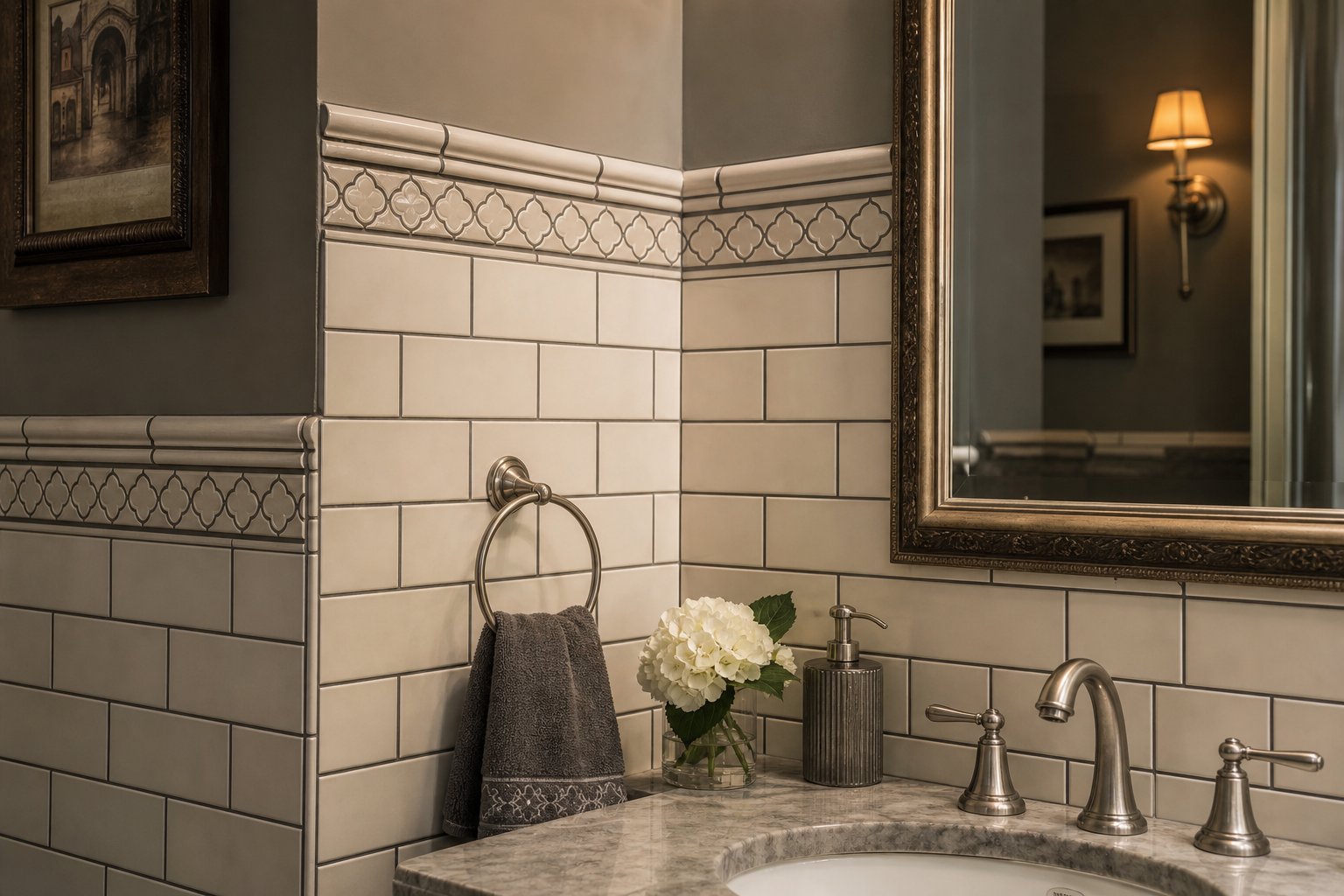
Grout color has an enormous impact on the final appearance. A charcoal grout with white subway tile creates a bold, graphic look; a matching white grout creates a seamless, uniform effect. Epoxy grout is significantly more stain-resistant than cement-based grout — especially important in powder rooms where guests track in dirt and there’s no shower rinse cycle to keep grout clean. We discuss grout options and color matching on every project. Learn more about this on our post about the grout selection process for Delaware County tile projects.
Timeline and Disruption
A typical powder room tile installation runs 1–2 days for the tile setting, plus 24–48 hours for grout cure time. We plan project timelines so your half-bath is out of service for the minimum necessary period. For homes in Malvern, Wayne, and West Chester with only one powder room on the main floor, we understand this is an important consideration — and we schedule accordingly.
Frequently Asked Questions
How much does it cost to tile a powder room in Chester County PA?
Powder room tile installation in Chester County typically ranges from $800 to $2,500 for labor, depending on the complexity of the pattern, substrate condition, and square footage. Materials vary widely — from $2–$4/sq ft for standard ceramic to $15–$40/sq ft for premium porcelain slabs or natural stone. Our team provides detailed, itemized estimates so you know exactly what you’re investing in. Request a free quote here.
Can I tile over existing tile in my powder room?
In some cases, yes — tiling over existing tile is possible if the existing tile is firmly adhered, the substrate is stable, and the added height of a second tile layer won’t create transition issues at the door threshold. Our team assesses every situation individually. In older Chester County homes, we frequently find that removing the old tile and starting fresh is the better investment for a lasting result. See our related post on why subfloor preparation matters for a deeper look at this issue.
What’s the best tile for a small powder room?
For small powder rooms, medium-format tiles (12×12 to 18×18) or mosaics tend to work best on the floor — they create visual interest without overwhelming the space. On walls, oversized tiles (24×24 or larger) can actually work well if you’re going for a minimal, seamless look. The key is intentionality: every design choice should feel deliberate rather than accidental. Our tile installation team can walk you through the options in person.
How long does powder room tile installation take?
Most powder room tile projects take 1–2 days to install, plus cure time. The total project timeline (including any necessary demo, substrate repair, and grout/sealant cure) is typically 3–5 days. We’ll give you a precise timeline during your free consultation.
Do I need to seal powder room tile?
Porcelain tile is non-porous and generally does not require sealing. Natural stone (marble, travertine, slate) and cement tile DO require sealing — both initially and on a regular maintenance schedule. Grout — regardless of tile type — benefits from a penetrating grout sealer applied after cure. Our team always discusses sealing requirements as part of every project handoff.
Does Milford Mills Tile serve areas outside Chester County?
Yes — we serve Chester County, Delaware County, Montgomery County, and surrounding areas throughout southeastern Pennsylvania. Check our service areas page for a full list of communities we serve.
Get a Free Estimate from Milford Mills Tile
Your powder room is a small canvas with big potential. Whether you’re drawn to the drama of a bold black-and-white mosaic floor, the elegance of floor-to-ceiling marble-look porcelain, or the warm character of handcrafted zellige-inspired tile, the Milford Mills Tile team brings the installation expertise to make it last.
We’ve served Chester County homeowners — from West Chester and Malvern to Bryn Mawr and Phoenixville — for over a decade. Our licensed, experienced installers deliver meticulous craftsmanship on every project, no matter the size.
Explore our full range of bathroom tile installation services or visit our portfolio of completed tile projects for inspiration.
Ready to transform your powder room? Contact Milford Mills Tile today for a free, no-obligation estimate. We serve Chester County, Delaware County, and the Main Line — and we’re ready to help you design a powder room that stops guests in their tracks.
Related Posts