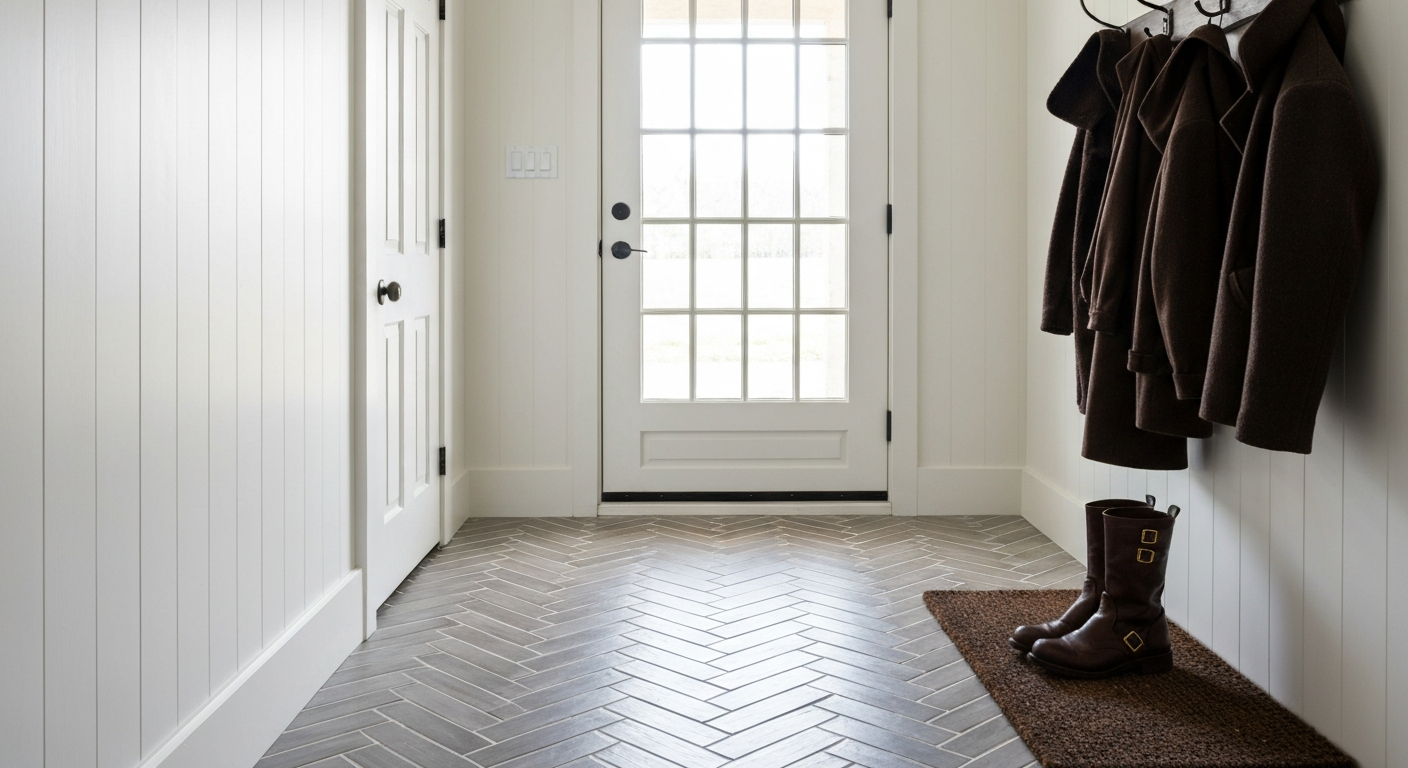
Discover the best mudroom and entryway tile flooring options for Chester County homes. Learn which materials handle heavy foot traffic, moisture, and seasonal wear.
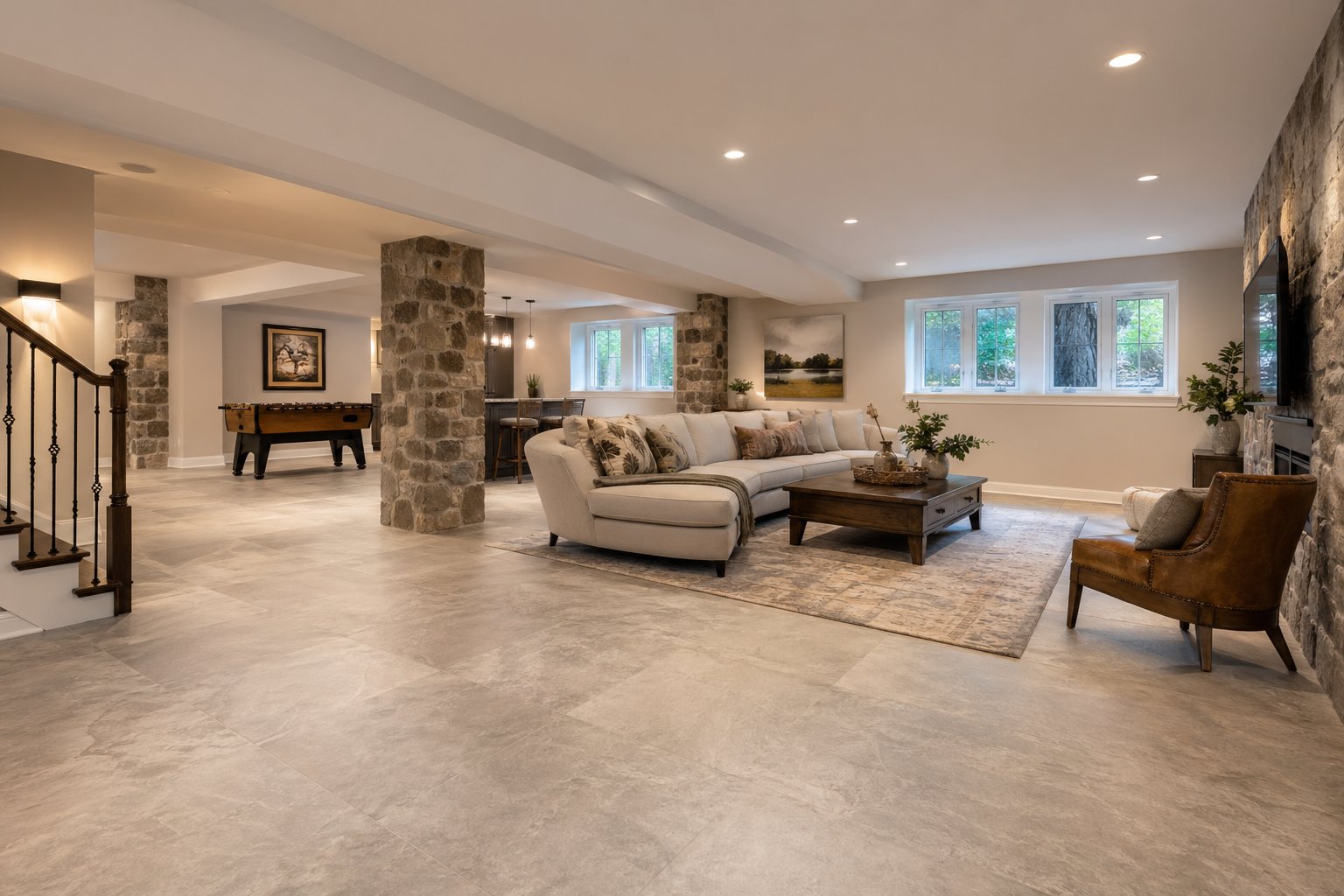
Tile for Your Finished Basement: A Chester County Homeowner’s Guide
Quick Summary
- Porcelain and ceramic tile are ideal for basements because they resist moisture, mold, and temperature swings common in below-grade Chester County homes.
- Proper subfloor preparation — including moisture testing, crack isolation membranes, and self-leveling compound — is the single most important step for a long-lasting basement tile installation.
- Large-format porcelain tiles in wood-look or stone-look finishes are the most popular choice among Chester County homeowners finishing their basements in 2026.
- Professional installation ensures your basement floor performs for decades — even through Pennsylvania’s freeze-thaw cycles.
- A tiled basement can recoup up to 70% of project cost at resale, according to the National Association of Realtors.
If you’re a homeowner in Chester County, PA, you already know that your basement holds enormous potential. Whether you’re dreaming of a family game room in Malvern, a home office in West Chester, or a guest suite along the Main Line, the right flooring sets the foundation for everything that follows. And when it comes to below-grade spaces, tile is the smartest choice you can make.
At Milford Mills Tile, we’ve installed thousands of square feet of basement tile across Chester County, Delaware County, and the Philadelphia suburbs. In this guide, we’ll walk you through choosing, preparing for, and installing tile in your finished basement — from moisture management to design ideas that transform underused space into the most comfortable room in your home.
Why Tile Is the Best Flooring for Chester County Basements
Basements in southeastern Pennsylvania face unique challenges. Clay-heavy soil, seasonal water table fluctuations, and freeze-thaw cycles punish traditional flooring materials. Carpet traps moisture and breeds mold. Hardwood warps and buckles. Even luxury vinyl plank can trap moisture underneath when installed over a damp concrete slab.
Tile — specifically porcelain tile — is engineered to thrive in exactly these conditions:
- Near-zero water absorption: Porcelain absorbs less than 0.5% moisture, making it impervious to humidity and seepage common in below-grade spaces.
- Mold and mildew resistant: Tile doesn’t provide an organic surface for mold growth — a critical advantage in Chester County’s humid summers.
- Temperature stable: Won’t expand, contract, or warp with temperature swings between a Pennsylvania winter basement (55°F) and summer (75°F+).
- Compatible with radiant heat: Adding radiant floor heating? Tile is the ideal conductor for year-round comfort.
- Incredibly durable: Porcelain rated PEI 4 or 5 handles heavy foot traffic, furniture, and home gym equipment without wearing down.
According to the Tile Council of North America, porcelain installations in properly prepared basements last 50+ years with minimal maintenance.
Choosing the Right Tile Material for Your Basement
Not all tile is created equal. Below-grade installations demand specific material characteristics. Here’s how the popular options compare:
Porcelain Tile (Our Top Recommendation)
Porcelain is fired at higher temperatures than standard ceramic, creating a denser, harder tile with superior moisture resistance. For basements, we recommend through-body porcelain — the color runs all the way through, so chips aren’t noticeable. Large-format porcelain in 12×24 or 24×24 sizes creates a seamless look that makes basements feel larger. Wood-look porcelain planks are popular among our clients in Villanova and Wayne who want the warmth of hardwood without the moisture risk.
Ceramic Tile
Ceramic tile works well in basements that stay consistently dry. It’s more budget-friendly than porcelain — typically 20–30% less per square foot — but absorbs more moisture (3–7% absorption rate). If your basement has never had moisture issues, glazed ceramic in a slip-resistant finish is a solid choice.
Natural Stone
Slate, limestone, and travertine can create stunning basement floors, especially in Chester County’s historic stone homes where they complement the existing architecture. However, natural stone requires sealing every 1–2 years and is more susceptible to moisture damage. We typically recommend natural stone for above-grade installations unless the basement has been professionally waterproofed.
What to Avoid Below Grade
Stay away from polished marble (too slippery when damp), unsealed terracotta (absorbs moisture like a sponge), and very small mosaic tiles in large open areas (too many grout lines to maintain). Bigger tiles with fewer grout joints means less maintenance and better moisture performance.
The Critical Step Most Contractors Skip: Subfloor Preparation
Here’s where professional experience separates a tile floor that lasts decades from one that cracks within a year. Your concrete basement slab is not ready for tile just because it looks smooth. Every basement slab in Chester County needs thorough preparation before a single tile is set.
Step 1: Moisture Testing
We perform calcium chloride moisture testing on every basement slab before installation. This ASTM F1869-compliant test measures the moisture vapor emission rate (MVER) over 72 hours. If the reading exceeds 3 lbs per 1,000 sq ft per 24 hours, we apply a moisture mitigation system before proceeding. Skipping this test is the number one reason basement tile installations fail.
Step 2: Crack Assessment and Repair
Nearly every basement slab in Chester County has cracks — simply the nature of concrete settling over Pennsylvania’s clay soil. Hairline cracks under 1/8″ get filled with flexible polyurethane sealant. Larger structural cracks may need epoxy injection. We then install a crack isolation membrane (like Schluter DITRA) over the entire floor, preventing cracks in the concrete from telegraphing up through your new tile.
Step 3: Leveling
Basement slabs are rarely level. Most slope toward a floor drain, and decades of settling create dips and high spots. We use self-leveling compound to create a flat substrate, checking with a 10-foot straightedge to ensure no deviation greater than 1/8″ over 10 feet — the industry standard for large-format tile.
Design Ideas: Transforming Your Chester County Basement
Once the prep work is done, the fun begins. Here are the basement tile designs we’re installing most frequently across Chester County in 2026:
The Modern Family Room
Large-format wood-look porcelain planks (8×48″ or 12×48″) in warm oak or grey barnwood tones create a living-room feel that’s completely waterproof. Pair with area rugs and you’ve got a space indistinguishable from a main-floor family room. This is our most requested basement design in West Chester and Downingtown.
The Home Gym / Recreation Space
Textured concrete-look porcelain in 24×24 format gives an industrial-chic aesthetic while providing slip resistance for workout areas. PEI 5-rated tiles handle dropped weights and heavy foot traffic. Install with a minimal grout joint (1/16″) for a seamless, easy-to-clean surface.
The Guest Suite / In-Law Apartment
Stone-look porcelain in warm travertine or cream tones makes a basement bedroom feel welcoming and high-end. Combined with radiant floor heating, the space becomes genuinely comfortable. This design trend has exploded in Delaware County and along the Main Line where multi-generational living is increasingly common.
The Wine Cellar / Entertainment Bar
Handmade-look encaustic or patterned porcelain tiles create a distinctive floor that anchors the entire room. Geometric patterns in muted tones — charcoal, terracotta, cream — require expert craftsmanship, but the result is unforgettable.
Radiant Floor Heating: The Basement Game-Changer
“Won’t tile feel freezing in winter?” With radiant floor heating, absolutely not. Electric radiant heat mats installed directly beneath the tile transform your basement from the coldest room in the house to the warmest.
Tile is the most efficient conductor for radiant heat, transferring warmth evenly and retaining it longer than any other flooring. Homeowners across Chester County consistently tell us radiant heat is the single upgrade they’re happiest with.
The cost adds roughly $8–12 per square foot — for a typical 400-square-foot basement, that’s $3,200–$4,800. A modest investment for transformative comfort. Learn more about our tile installation services across Chester County.
What to Expect: Timeline, Cost, and Process
A professional basement tile installation in Chester County typically follows this timeline:
- Day 1–2: Moisture testing, crack repair, and membrane installation
- Day 2–3: Self-leveling compound and curing
- Day 4–6: Tile installation (400 sq ft takes 2–3 days)
- Day 7: Grouting and cleanup
- Day 8–9: Grout curing — light foot traffic only
- Day 10: Final walkthrough and full use
Cost ranges for Chester County basement tile projects in 2026:
- Budget-friendly (ceramic tile, basic prep): $8–12/sq ft installed
- Mid-range (porcelain tile, full prep with membrane): $14–20/sq ft installed
- Premium (large-format porcelain, radiant heat, decorative patterns): $22–32/sq ft installed
For a typical 400–600 square foot Chester County basement, total project costs range from $5,600 to $19,200. The National Association of Realtors’ 2025 Remodeling Impact Report found that basement finishing projects recoup approximately 70% of their cost at resale — in competitive Chester County real estate, a professionally tiled basement can be the differentiator that wins a bidding war.
Common Mistakes to Avoid
After years of installing basement tile across Chester County, we’ve seen what goes wrong when corners are cut:
- Skipping moisture testing: Tile installed over a moisture-emitting slab will eventually lose bond, crack at grout lines, or develop mold underneath.
- Using standard thinset instead of modified: Below-grade installations require polymer-modified thinset that flexes with the concrete. Standard thinset is too rigid.
- Ignoring the perimeter: Tile must stop 1/4″ from all walls, covered with baseboard or shoe molding. This expansion gap prevents buckling when the slab expands.
- Choosing the wrong grout: In basements, we always recommend epoxy grout — it’s waterproof, stain-proof, and never needs sealing. Read more in our complete grout selection guide.
- Forgetting a sump pump check: Before committing to a basement tile project, ensure your sump pump is functional and your waterproofing is sound.
Frequently Asked Questions
Can you install tile over a painted basement floor?
No — paint must be completely removed first. Thinset needs to bond directly to the concrete substrate. We use diamond grinders to remove paint and create the ideal surface profile for adhesion.
What if my basement floods — will the tile survive?
Porcelain tile itself is waterproof and will survive flooding without damage. With proper installation including a waterproof membrane and epoxy grout, even a minor flood won’t cause lasting harm. The tile can be dried, cleaned, and used immediately — a major advantage over carpet or hardwood, which would need complete replacement.
How soon after new construction can I tile the basement?
New concrete slabs need a minimum of 28 days to cure, though we prefer 60–90 days to reach final moisture equilibrium.
Ready to Transform Your Chester County Basement?
Your basement shouldn’t be wasted space. With the right tile, proper preparation, and professional installation, it becomes one of the most valuable rooms in your home — beautiful, durable, and built to handle everything Chester County’s climate throws at it.
At Milford Mills Tile, we specialize in below-grade installations across Chester County, Delaware County, and the Main Line. From moisture testing to final grout, every step is handled by tile professionals who understand the unique demands of basement work in southeastern Pennsylvania.
Contact us today for a free consultation and estimate on your basement tile project. Whether you’re in West Chester, Malvern, Villanova, Wayne, or anywhere in Chester County, we’ll help you turn your basement into the room you’ve always wanted.
Related Posts