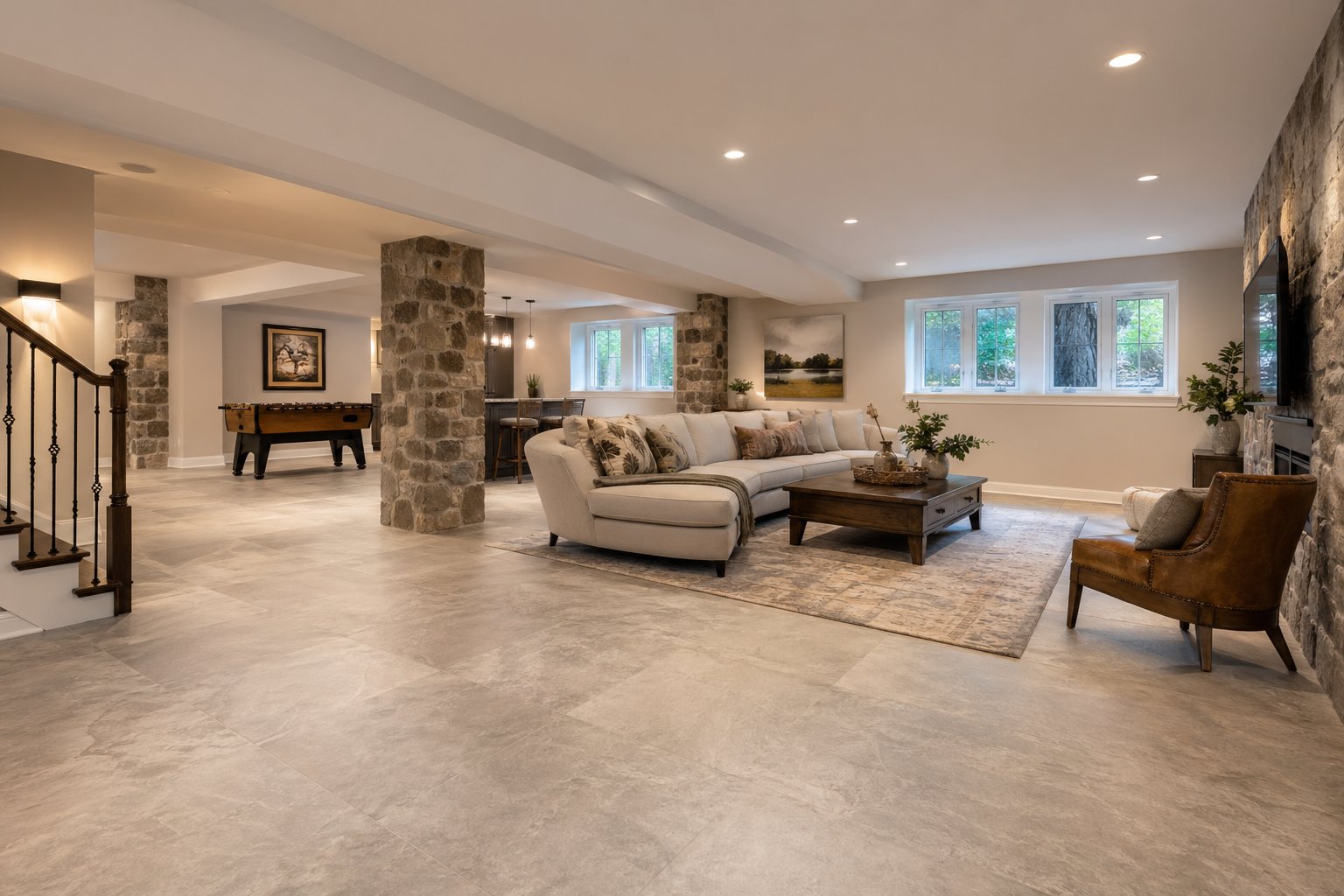
Quick Summary Porcelain and ceramic tile are ideal for basements because they resist moisture, mold,…
Mudroom and Entryway Tile Flooring: The Best Options for Chester County Homes
Your mudroom takes a beating. Between snow-caked boots in February and muddy cleats in April, it handles more abuse per square foot than any other room in your Chester County home. That is exactly why the right tile flooring matters here more than anywhere else.
At Milford Mills, we have spent over 20 years installing tile in homes across Malvern, West Chester, King of Prussia, and the wider Main Line area. Mudrooms and entryways are some of our favorite projects because they combine real-world function with genuine design opportunity. Here is what you need to know before choosing mudroom tile flooring for your home.
Why Tile Is the Best Choice for Mudrooms and Entryways
Mudrooms are transition zones. They sit between the unpredictable outdoors and your carefully maintained interior. That means your flooring needs to handle moisture, dirt, temperature swings, and constant foot traffic without showing wear.
Tile checks every box:
- Water resistance. Unlike hardwood or laminate, porcelain and ceramic tile will not warp, swell, or stain when exposed to wet boots and dripping umbrellas.
- Durability. Quality tile stands up to decades of heavy use. We regularly see tile mudroom floors in Bryn Mawr and Villanova homes that look as good as the day they were installed.
- Easy maintenance. A quick sweep and occasional mop is all it takes. No sealing, no refinishing, no special cleaners.
- Design versatility. Tile comes in virtually every color, pattern, and texture. Your mudroom does not have to look utilitarian just because it works hard.
Top Tile Materials for Mudroom Flooring
Not all tile is created equal when it comes to high-traffic transitional spaces. Here are the materials we recommend most often to homeowners in Delaware County and Montgomery County.
Porcelain Tile
Porcelain is our top recommendation for mudrooms. It is denser and less porous than standard ceramic, which means it absorbs almost no moisture — typically less than 0.5 percent. That matters when your family tracks in rain, snow, and everything in between.
Porcelain also rates high on the PEI (Porcelain Enamel Institute) hardness scale. For mudrooms, we recommend PEI Class 4 or 5, which handles heavy residential and even commercial foot traffic.
Textured or Matte-Finish Tile
Slip resistance is critical in any space that regularly gets wet. Glossy, polished tile may look beautiful in a formal foyer, but it becomes a safety hazard in a working mudroom. We steer our clients toward textured, matte, or honed finishes that provide grip even when the floor is damp.
Look for tiles with a dynamic coefficient of friction (DCOF) rating of 0.42 or higher. This is the industry standard for wet-area safety, and it is a specification we always verify before recommending a product.
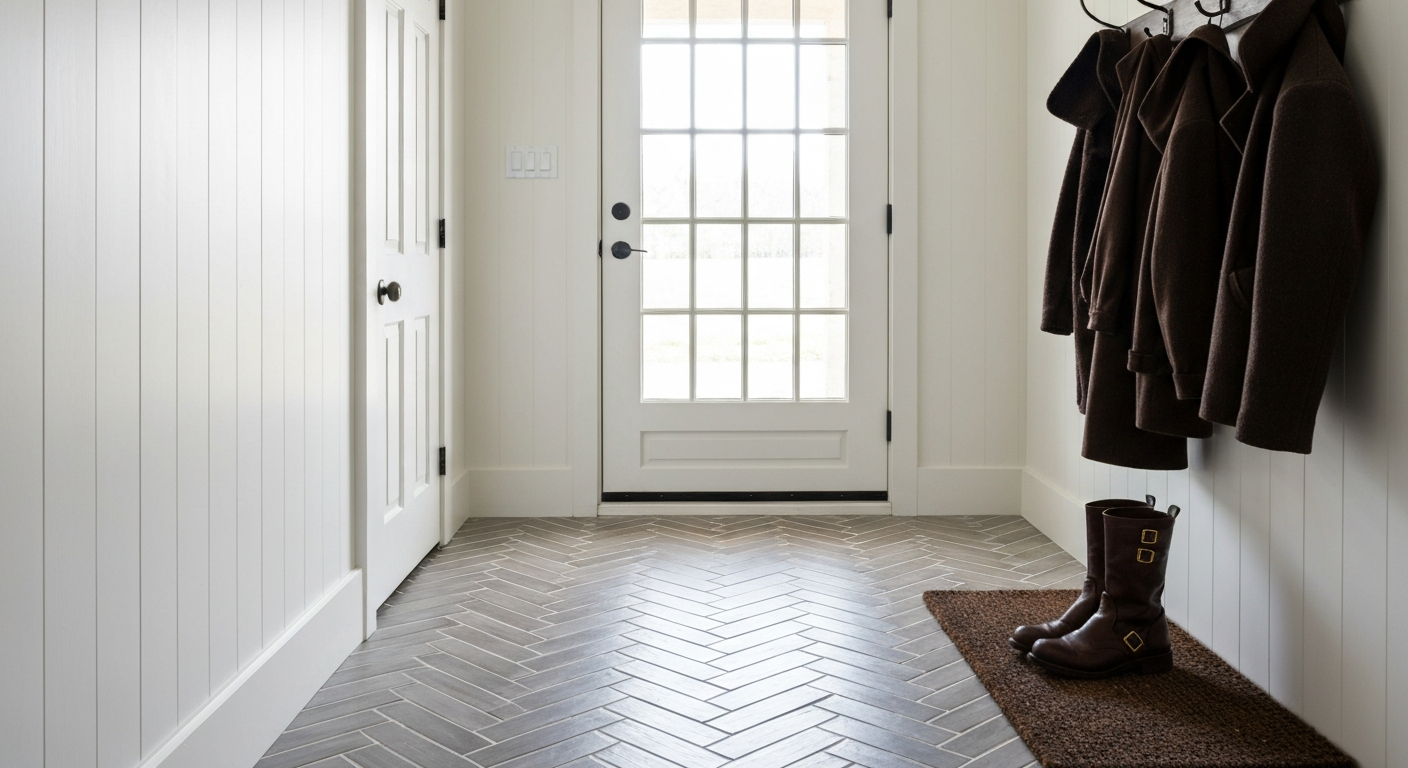
Wood-Look Porcelain Plank
Want the warmth of hardwood without the maintenance headaches? Wood-look porcelain planks have become one of the most popular choices in Chester County mudrooms. They give you the natural grain patterns and warm tones of oak, walnut, or reclaimed barn wood, but with the durability and water resistance of porcelain.
This is a particularly popular option in homes across West Chester and Malvern where homeowners want their mudroom to flow visually into adjacent hardwood hallways.
Natural Stone-Look Porcelain
For homeowners who love the look of slate, travertine, or limestone but want lower maintenance, stone-look porcelain tiles deliver that aesthetic without the sealing and upkeep that natural stone requires. These work especially well in Main Line homes where the mudroom connects directly to outdoor entertaining spaces.
Design Ideas That Work as Hard as Your Mudroom
A functional mudroom does not have to feel like an afterthought. Here are design strategies we use regularly in Chester County installations.
Patterned Encaustic-Style Tile
Bold geometric patterns are having a moment in mudroom design. Encaustic-look porcelain tiles — which replicate the classic cement tile patterns popular in European homes — add character and personality to what might otherwise be a purely functional space. They also do an excellent job of hiding dirt between cleanings.
Herringbone and Chevron Layouts
The layout pattern matters as much as the tile itself. A herringbone or chevron installation turns even a simple rectangular tile into something visually dynamic. This is one of the most-requested patterns we install in entryways throughout King of Prussia and Bryn Mawr.
Contrasting Borders and Thresholds
Using a darker border tile or a contrasting threshold strip where the mudroom meets the main hallway creates a visual boundary that defines the space. It is a subtle design move that signals the transition from utility zone to living space.
Installation Considerations Specific to Pennsylvania Homes
Our climate in southeastern Pennsylvania creates specific challenges that your installer needs to account for.
- Subfloor preparation. Chester County homes range from 18th-century stone farmhouses to modern new builds. Each type of subfloor — concrete slab, plywood, or existing vinyl — requires different preparation. Skipping proper subfloor prep is the number one reason tile installations fail prematurely.
- Radiant heat compatibility. If you are considering radiant floor heating in your mudroom (and we strongly recommend it for Pennsylvania winters), your tile and setting materials need to be rated for thermal cycling. Not all thinsets perform equally under heated subfloors.
- Expansion joints. Temperature fluctuations between a cold mudroom and a heated interior create movement in the subfloor. Proper expansion joints and flexible caulk at transitions prevent cracked tiles and grout down the road.
- Drainage planning. For mudrooms with exterior doors, we sometimes recommend a slight slope toward a floor drain, especially in homes in Greenville, DE and other areas where heavy spring rains are common.
How to Choose the Right Tile for Your Mudroom
With so many options available, here is a practical decision framework:
- Assess your traffic level. A family of five with two dogs needs PEI Class 5 porcelain. A couple with light use can consider a wider range of options.
- Consider your aesthetic. Do you want the mudroom to blend with adjacent rooms or stand out as its own space? This drives your material and color choices.
- Think about maintenance tolerance. Light-colored grout shows dirt faster. Large-format tiles mean fewer grout lines. Be honest about how much cleaning you actually want to do.
- Budget for proper installation. The tile itself is only part of the investment. Subfloor prep, waterproofing, and professional installation are what make the difference between a floor that lasts five years and one that lasts fifty.
Let Milford Mills Handle Your Mudroom Tile Project
A well-designed mudroom makes your daily routine smoother and adds real value to your home. Whether you are renovating a historic Chester County farmhouse or finishing a new build in King of Prussia, our team brings 20-plus years of tile installation expertise to every project.
We handle everything from material selection and subfloor preparation to precision installation and finishing details. Ready to transform your mudroom? Contact Milford Mills today for a free consultation and let us help you choose the perfect tile for your space.
Related Posts