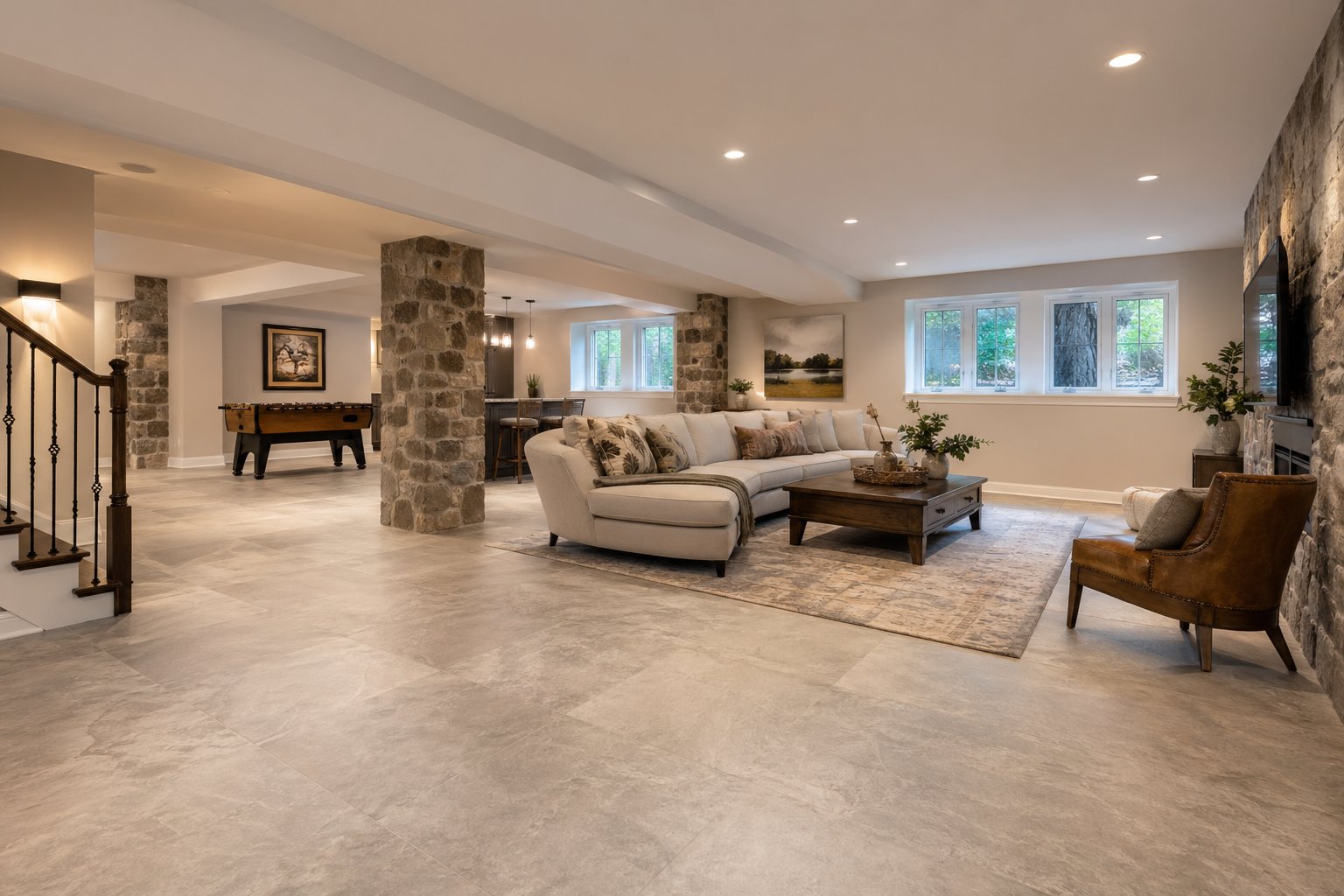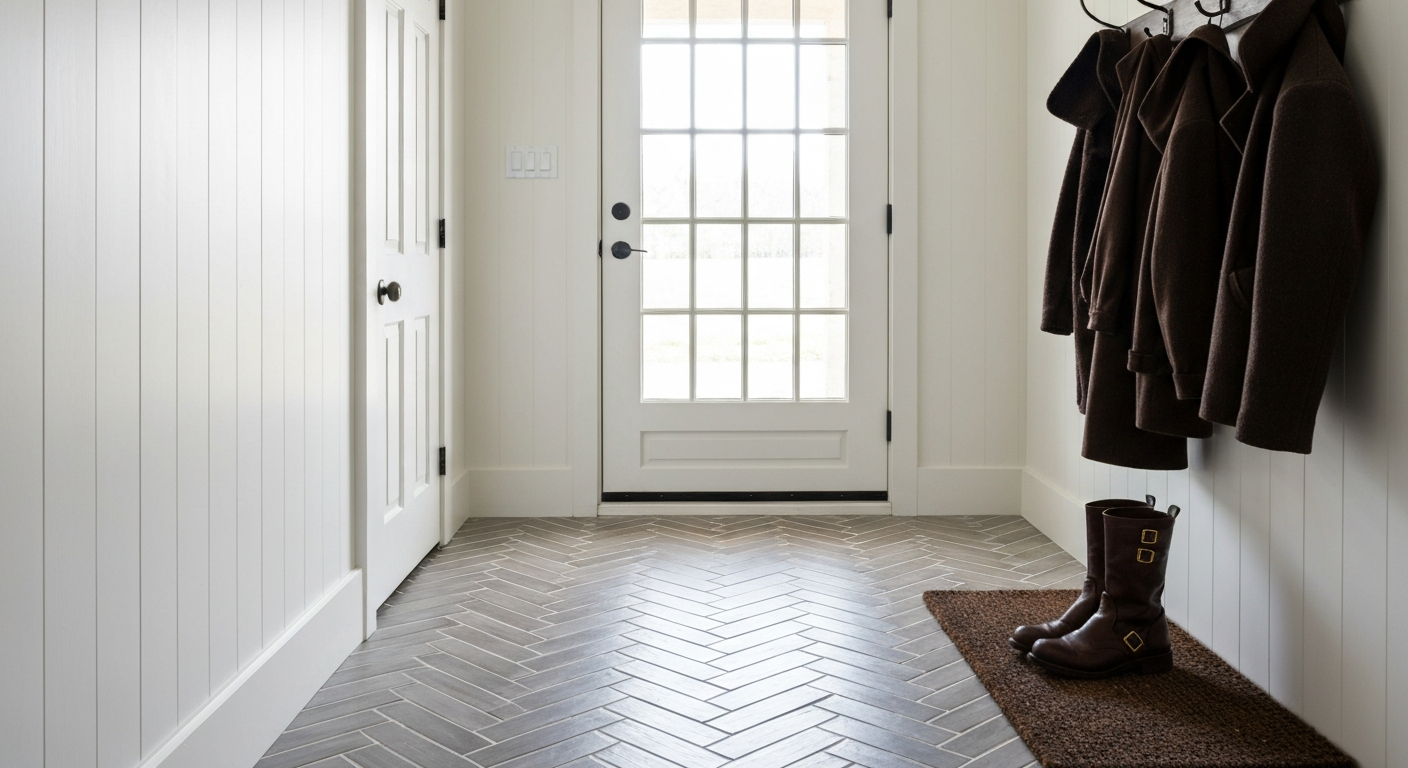
Quick Summary Porcelain and ceramic tile are ideal for basements because they resist moisture, mold,…

The Grout Debate: How to Choose the Perfect Color (and Type) for Your Delaware County Tile Project
Most homeowners spend weeks selecting the perfect tile for their bathroom remodel or kitchen backsplash, only to treat grout selection as an afterthought. That’s a mistake that can completely transform your finished project, and not always for the better.
After more than 20 years installing tile throughout Delaware County, PA, we’ve seen how the right grout choice elevates a beautiful tile installation into something truly stunning. We’ve also witnessed how the wrong grout can undermine even the most expensive tile work. The truth is, grout is just as important as the tile itself.
Whether you’re planning a bathroom tile remodel in Media, PA, or installing new floors in Bryn Mawr, understanding grout types and colors isn’t optional; it’s essential for a professional finish that lasts.
Why Grout Selection Matters More Than You Think
Grout does far more than fill the spaces between your tiles—it’s the quiet “make-or-break” detail that determines how your tile looks, how it holds up, and how much maintenance you’re signing up for.
From bathroom remodels in Media, PA, to kitchen backsplashes and floors across Delaware County (and throughout Chester and Montgomery Counties, too), we see the same truth over and over: grout is part of the system, not an accessory.
From a performance standpoint, the right grout selection strengthens the installation by helping lock tiles in place and limiting moisture penetration, which protects the substrate from water damage that can get expensive fast. From a design standpoint, grout color controls the entire visual read of the space—either letting the tile pattern take center stage or creating a clean, seamless field that feels larger and calmer. And for long-term durability, choosing the correct grout for the application is what reduces cracking, staining, and premature wear. As a professional tile installer Delaware County, PA, homeowners rely on, we’re often called in to repair projects where grout was treated like an afterthought—and the installation paid the price.
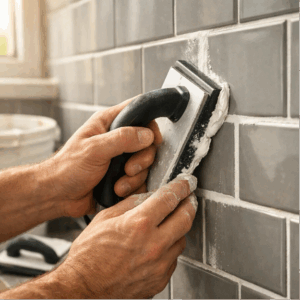
Understanding the Three Main Types of Grout
Before you can choose a color, you need to know which grout type actually fits your installation. Not all grout performs the same, and using the wrong one is one of the most common reasons DIY tile projects fail early—especially in wet areas like showers or in high-traffic floors. With 20+ years of tile installation experience across Delaware County, Chester County, and Montgomery County, we match grout to the tile, the joint width, and the real-life use of the space so the finished work looks beautiful and lasts.
Sanded Grout: The Workhorse Option
Sanded grout is typically the right choice for floor tile installations and any grout joints wider than 1/8 inch because the fine sand particles add strength and reduce shrinkage in wider lines. In busy homes throughout Delaware County—think entryways, kitchens, and mudrooms—this durability matters. The tradeoff is that sanded grout can scratch more delicate surfaces (like polished stone or some glass tile), and cement-based sanded grout still needs proper sealing to improve stain resistance.
You’ll also notice it has a slightly more textured finish than unsanded grout, which is normal and expected.
Unsanded Grout: The Delicate Touch
Unsanded grout has a smoother consistency that’s best for wall tiles, polished stone, and narrow joints under 1/8 inch. We often use it in bathroom tile remodels in Media and Bryn Mawr, where clients choose polished marble, glass mosaics, or rectified porcelain with minimal grout lines. The smooth texture helps avoid scratching, and it packs into tight joints more easily—especially on vertical surfaces. The main limitation is performance in wide joints and on floors: unsanded grout can shrink if the joint is too large and generally doesn’t hold up as well as sanded grout in heavy-traffic areas.
Epoxy Grout: The Premium Performer
When homeowners in Delaware County ask us about epoxy grout vs cement grout, we keep it simple: epoxy is the premium option for durability and stain resistance, especially in showers, steam showers, and hardworking kitchens, but it costs more and demands experienced installation. Epoxy grout is highly water resistant, chemical resistant, and essentially stain-proof without sealing, which means far less ongoing maintenance and fewer long-term headaches. The tradeoff is a higher material and labor cost, a shorter working time during installation, and a more demanding cleanup process while it’s being applied. Our team installs epoxy grout regularly in master bath showers and high-end kitchen backsplashes throughout Media, Bryn Mawr, and surrounding areas—including projects in Chester and Montgomery Counties—when clients want the best long-term performance.

The Color Debate: Matching vs. Contrasting Grout
This is the choice that changes the “feel” of the entire room. Do you want the grout to visually disappear so the tile reads as one continuous surface, or do you want the grout to outline every tile and make the pattern the star? We help homeowners throughout Delaware County—and across Chester and Montgomery Counties—make this decision during design consultation because it’s not just a style preference; it affects how big the room feels, how busy the surface looks, and how much you notice the lines day to day.
Matching Grout: The Seamless Approach
Matching grout creates a unified, flowing appearance where the tile takes center stage and the lines fade into the background. It’s a strong fit for modern, clean designs, and it’s especially effective in smaller bathrooms because it can make the space feel more open. Matching grout is also forgiving: if a wall is slightly out of square or a tile has natural variation, the overall look stays calm and consistent. We’ve completed stunning bathroom tile remodel projects throughout Delaware County, where a warm gray grout paired with gray tile creates an elegant, spa-like atmosphere that feels high-end without trying too hard—an approach that works just as well in a Malvern powder room as it does in a West Chester primary bath.
Contrasting Grout: The Bold Statement
Contrasting grout highlights your tile pattern and layout, which is why it’s so popular for classic subway tile, geometric floors, and statement backsplashes. White subway tile with charcoal grout is the go-to example for a reason: it’s timeless, it adds definition, and it makes the craftsmanship obvious. The catch is that contrast is honest—every grout line is more visible, and that means precision matters. When clients in places like Bryn Mawr, Media, and even nearby Greenville, DE, want a bold look, we make sure the layout, spacing, and grout work are executed cleanly, because that’s what keeps “bold” from turning into “busy.”
How to Choose the Right Grout Color for Your Specific Project
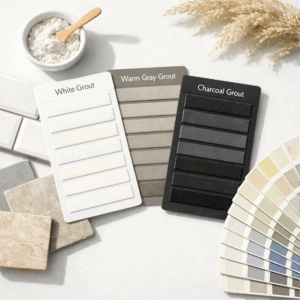
Based on our 20+ years serving homeowners throughout Chester, Delaware, and Montgomery Counties (and nearby communities like Greenville, DE), our approach to grout color is straightforward: we choose a color that complements the tile’s undertones, fits the way the space is used, and won’t become a maintenance headache six months from now.
Consider Your Tile’s Undertones
Tile almost always leans warm or cool, even when it looks “neutral” at first glance. If the tile has cooler undertones, a warm, creamy grout can make it feel slightly off—and the same mismatch happens in reverse. In practice, we look for balance: warm whites tend to play better with cool-toned tiles, bright/cool whites often look cleaner next to warmer tiles, and warm gray is one of the most reliable “universal neutrals” when you want a safe, designer-approved middle ground.
Think About Location and Traffic
Where the tile lives matters just as much as what it looks like. On floors, grout takes the brunt of everyday life, so medium to darker tones are usually the smart call because they disguise dirt and wear—especially during Delaware County winters when salt, slush, and grit get tracked inside. On walls, you can lean more into style because the surface isn’t under the same abuse, which is why many homeowners choose lighter grout or more dramatic contrast on a backsplash. In showers and other wet areas, remember that darker grout can show soap scum and mineral deposits more clearly, while very light grout may show mildew if cleaning slips; this is also where epoxy grout can be a game-changer because it eliminates many of the usual staining and sealing concerns.
Factor in Maintenance Realities
We’ll always ask the honest question: how do you actually live in the space? Lighter grout can look crisp and beautiful, but it shows stains sooner and typically needs more upkeep to stay looking “new.” Darker grout can be more forgiving day-to-day, but it may fade over time in some settings or show residue in showers. For many busy households in places like West Chester, Malvern, and King of Prussia, medium tones—warm gray, taupe, and soft beige—land in the sweet spot: they read elevated and intentional, but they don’t punish you for skipping a scrub session.
Always Test Before Committing
This step is non-negotiable. Grout changes with lighting, surrounding finishes, and even the tile’s surface texture, so we provide samples and encourage homeowners to view them in their actual space—morning, afternoon, and evening—before locking in a final color. Your tile’s finish matters, too: glossy surfaces can make the same grout color appear darker than it does next to a matte tile.
Why Professional Installation Ensures Grout Longevity
Here’s what most homeowners don’t realize until they’ve seen a failure up close: the quality of grout installation matters more than the grout itself. Over two decades, we’ve repaired tile work across Delaware County, Chester County, and Montgomery County where the grout type was fine on paper—but the prep, mixing, cure time, or sealing was rushed, and the installation broke down early.
It starts below the tile. Professional tile installation services begin with a substrate that’s level, stable, and properly waterproofed where required, because grout can’t “make up for” movement underneath; if the base shifts, grout cracks—every time. From there, correct mixing and application are critical. Each grout type has a specific water-to-powder ratio and a working window that has to be respected; too much water weakens the grout, too little leaves voids, and both lead to problems you’ll see and feel later. We also take curing seriously, following manufacturer specs before sealing or al- lowing traffic, because rushing this stage compromises strength and stain resistance. Finally, for most cement-based grouts, sealing is what helps protect against moisture and staining—and timing matters, which is why we apply high-quality sealers at the right point in the curing process.
When you work with our team for your bathroom tile remodel or floor tile installation, you’re not just getting beautiful tile work—you’re investing in grout that performs the way it should for years.
Delaware County’s Trusted Grout Experts
Selecting grout might seem like a small detail, but it’s these details that separate adequate tile work from exceptional craftsmanship. Whether you’re in Media planning a master bath renovation or in Bryn Mawr updating your kitchen, the grout decisions you make today will impact your satisfaction for decades.
As a local tile installer Delaware County, PA, homeowners have trusted for over 20 years, we guide clients through every decision, from tile selection to grout type and color. No job is too big or small for our experienced team, and we handle everything from small powder room updates to whole-house renovations.
Our process stays simple and client-focused. We start with a comprehensive design consultation to understand your style, your day-to-day needs, and the realities of the space. From there, we give expert recommendations on grout type and color based on the tile, the joint width, and how the area will be used—whether it’s a shower in Media, a backsplash in Bryn Mawr, or new floors in Malvern or West Chester. Once the plan is set, our crew delivers professional installation using industry-best practices and premium materials, with transparent communication from prep through final cleanup so you always know what’s happening and what’s next.
We serve Media, Bryn Mawr, and communities throughout Delaware, Chester, and Montgomery Counties with the same commitment to quality craftsmanship and customer satisfaction that’s built our reputation over two decades.
Ready to Get Started on Your Tile Project?
Don’t let grout selection overwhelm you. Our team makes the process simple by guiding you through every option with patience and expertise. We’ll help you choose grout that complements your tile, suits your lifestyle, and stands the test of time.
Schedule your free in-home consultation today and discover why Delaware County homeowners choose Milford Mills Tile for tile installation services they can trust. Contact us at https://mm-tile.com or call to discuss your project, whether it’s a complete bathroom tile remodel, kitchen backsplash, or beautiful new floors.
Let’s transform your space with tile work that looks stunning from day one and stays beautiful for years to come. Because when it comes to grout, the difference is in the details, and the details are what we do best.
Related Posts