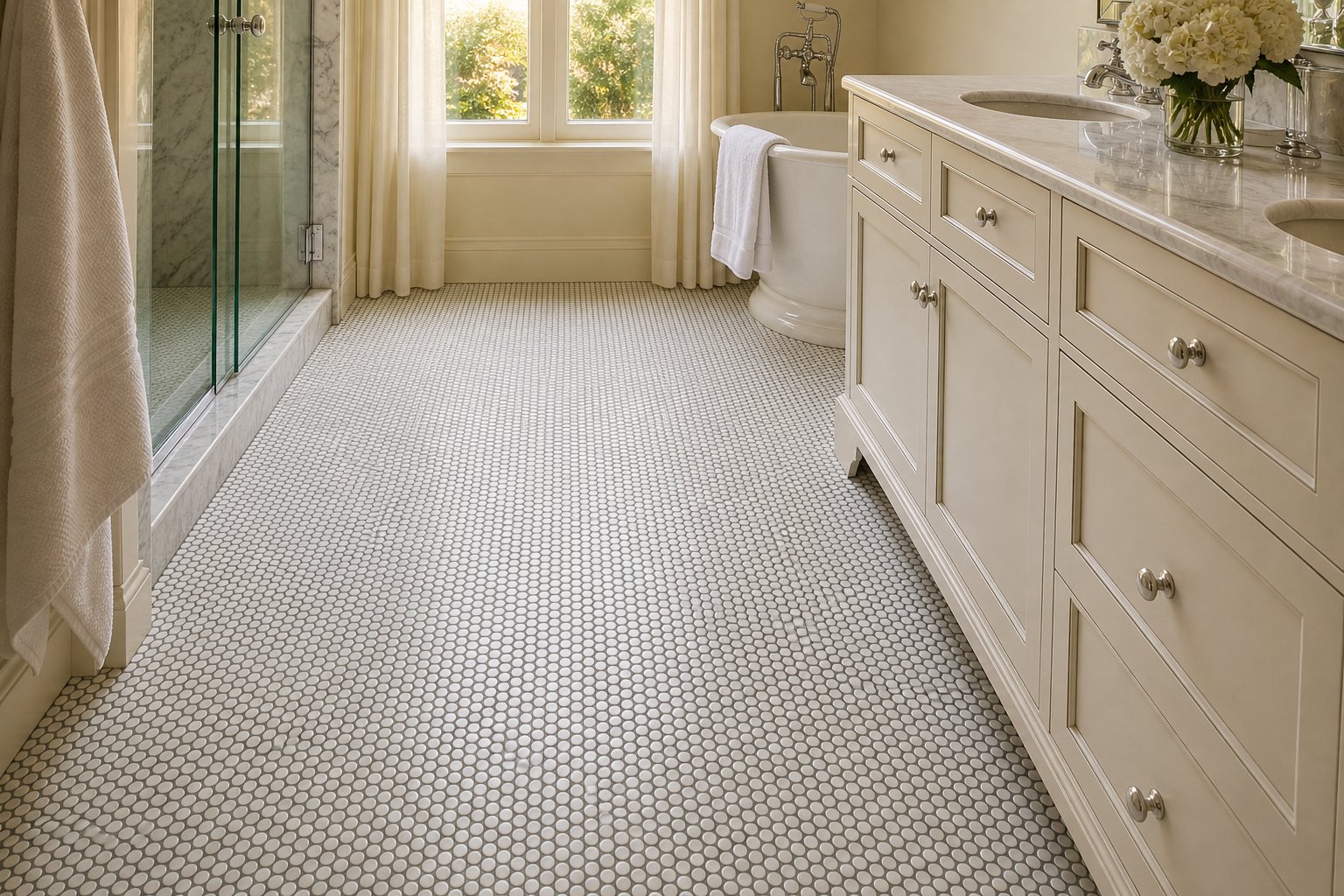
Chester County's historic homes are among the most beautiful in the Philadelphia region — Federal-era…

Tile Cleaning & Maintenance Guide for Chester County Homes
Reading time: 7 min
Quick Summary
- Weekly sweeping and damp-mopping prevents grit from scratching tile surfaces.
- Seal grout every 1–2 years to resist staining and moisture infiltration.
- Avoid vinegar and harsh acidic cleaners on natural stone and grout.
- Deep-clean grout lines with a baking soda + dish soap paste and a stiff brush.
- Prompt attention to cracks and loose tiles prevents water damage behind walls.
Beautiful tile is one of the most durable upgrades a Chester County homeowner can make — but even the finest porcelain or natural stone requires routine care to stay looking its best. The good news: proper tile and grout maintenance is straightforward once you know the rules.
At Milford Mills Tile, our installation teams serve homeowners across West Chester, Malvern, Phoenixville, and the broader Chester County area. We’ve seen what happens when beautiful tile is neglected — and we’ve put this guide together so your investment stays pristine for decades.
Table of Contents
- Daily and Weekly Cleaning Habits
- Grout Care: The Make-or-Break Step
- Deep Cleaning Tile and Grout
- Special Care for Natural Stone
- What to Avoid: Products That Damage Tile
- Spotting and Repairing Damage Early
- Frequently Asked Questions
Daily and Weekly Cleaning Habits
The single most effective thing you can do for tile longevity is also the simplest: sweep or vacuum regularly. Grit and dirt act like sandpaper underfoot — especially on matte or honed surfaces — gradually dulling the finish over time. In Chester County homes with pets or kids, daily sweeping in high-traffic areas like kitchens and mudrooms pays dividends.
Weekly damp-mop routine for ceramic and porcelain tile:
- Use a pH-neutral floor cleaner diluted in warm water (look for products labeled “safe for tile and grout”)
- Use a microfiber mop — string mops push dirty water into grout lines
- Rinse with a second pass of clean water to remove cleaner residue
- Allow the floor to dry fully before foot traffic
For wall tile — backsplashes, shower surrounds, bathroom walls — a weekly wipe-down with a damp cloth and mild cleaner keeps soap scum and hard water deposits from building up. In Chester County’s moderately hard water zones, a squeegee on shower walls after each use dramatically reduces mineral deposits.
Grout Care: The Make-or-Break Step
Grout is porous by nature — it absorbs liquids, cooking oils, soap residue, and foot-traffic grime. Unsealed or neglected grout darkens over time and becomes a breeding ground for mold and mildew, especially in wet areas like showers and around kitchen sinks.
Sealing grout: the most important maintenance step
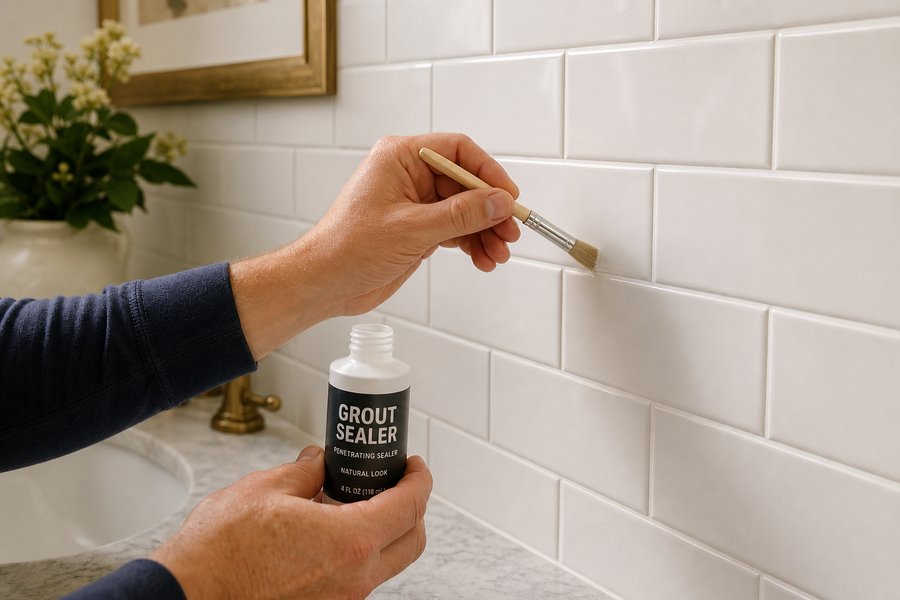
New grout should be sealed approximately 48–72 hours after installation (once fully cured). After that, reseal every 1–2 years for floors and every 2–3 years for dry wall tile. Signs that resealing is overdue: water no longer beads on the grout surface, or grout is visibly staining from routine spills.
Apply grout sealer with a small applicator brush or sealer bottle — work in sections, wipe off excess from tile faces within 5 minutes, and allow to cure per manufacturer instructions (typically 24 hours before water exposure).
Grout color maintenance: If your grout has darkened significantly, a professional grout cleaning and grout color restoration can bring it back without re-tiling. Milford Mills offers this service for Chester County clients — contact us for an assessment.
Deep Cleaning Tile and Grout
Even with regular maintenance, grout lines need a periodic deep clean — especially in shower floors and kitchen tile where buildup is heaviest. Here’s a proven approach:
DIY deep clean (safe for ceramic and porcelain):
- Mix a paste of baking soda + a few drops of dish soap — enough to form a thick paste
- Apply to grout lines with an old toothbrush or stiff grout brush
- Let sit for 10–15 minutes
- Scrub in circular motions, working in small sections
- Rinse thoroughly with warm water and a clean cloth
- For stubborn mold in shower grout: add a small amount of hydrogen peroxide to the paste (avoid on colored grout — test in an inconspicuous spot first)
For very large areas or years of buildup, a steam cleaner (handheld or floor unit) is highly effective on ceramic and porcelain — the steam penetrates grout without chemicals. Avoid steam on natural stone surfaces unless the stone is sealed and the manufacturer approves it.
Chester County homeowners with large-format tile installations — 24×24 or larger — benefit from professional deep cleaning every 2–3 years to maintain the original surface sheen.
Special Care for Natural Stone Tile
Natural stone — marble, travertine, slate, limestone — requires a different care protocol than ceramic or porcelain. Stone is sensitive to acidity and requires dedicated stone-safe products.
Daily/weekly care for natural stone:
- Sweep or dust mop daily (grit scratches polished stone quickly)
- Use only pH-neutral stone cleaner — never general-purpose floor cleaners
- Mop with minimal water — standing water can penetrate porous stone and cause staining
- Blot spills immediately — especially acidic liquids (wine, citrus juice, coffee)
Sealing natural stone: Stone tile requires sealing more frequently than ceramic grout — typically every 1–2 years, sometimes annually for high-traffic or wet areas like Malvern mudrooms or Main Line master baths. Use a penetrating impregnator sealer formulated for your specific stone type (marble sealers differ from travertine sealers).
Polishing: Polished marble and limestone will gradually lose their shine from foot traffic. Professional stone polishing (honing and buffing) restores the surface without replacement — ask Milford Mills about stone restoration services for Chester County homes.

What to Avoid: Products That Damage Tile
Some common household cleaning products are actively harmful to tile and grout. Avoid these:
- Vinegar and acidic cleaners: Highly effective against limescale, but devastating to grout (it etches the surface over time) and fatal to natural stone. Never use vinegar-based solutions on tile floors or stone.
- Bleach (undiluted): Strips grout color and weakens grout integrity over repeated use. For occasional mold treatment, a highly diluted bleach solution (1:10) is acceptable on ceramic/porcelain, but rinse thoroughly.
- Abrasive scrubbers (steel wool, scouring pads): Scratch glazed tile surfaces permanently.
- Oil-based soaps (like Murphy Oil Soap): Leave residue on tile that attracts dirt.
- Wax-based floor polishes: Not meant for tile — build up over time and become difficult to remove.
When in doubt, use a product specifically labeled for your tile type. The Tile Council of North America (TCNA) publishes guidance on safe cleaning methods by tile type.
Spotting and Repairing Damage Early
Minor tile issues caught early almost always cost far less to repair than damage that’s had months to develop. Watch for:
- Cracked grout lines: Often indicate subfloor movement or settling — common in older Chester County homes with wood subfloors. Regrouting alone won’t fix a subfloor issue; get an assessment first.
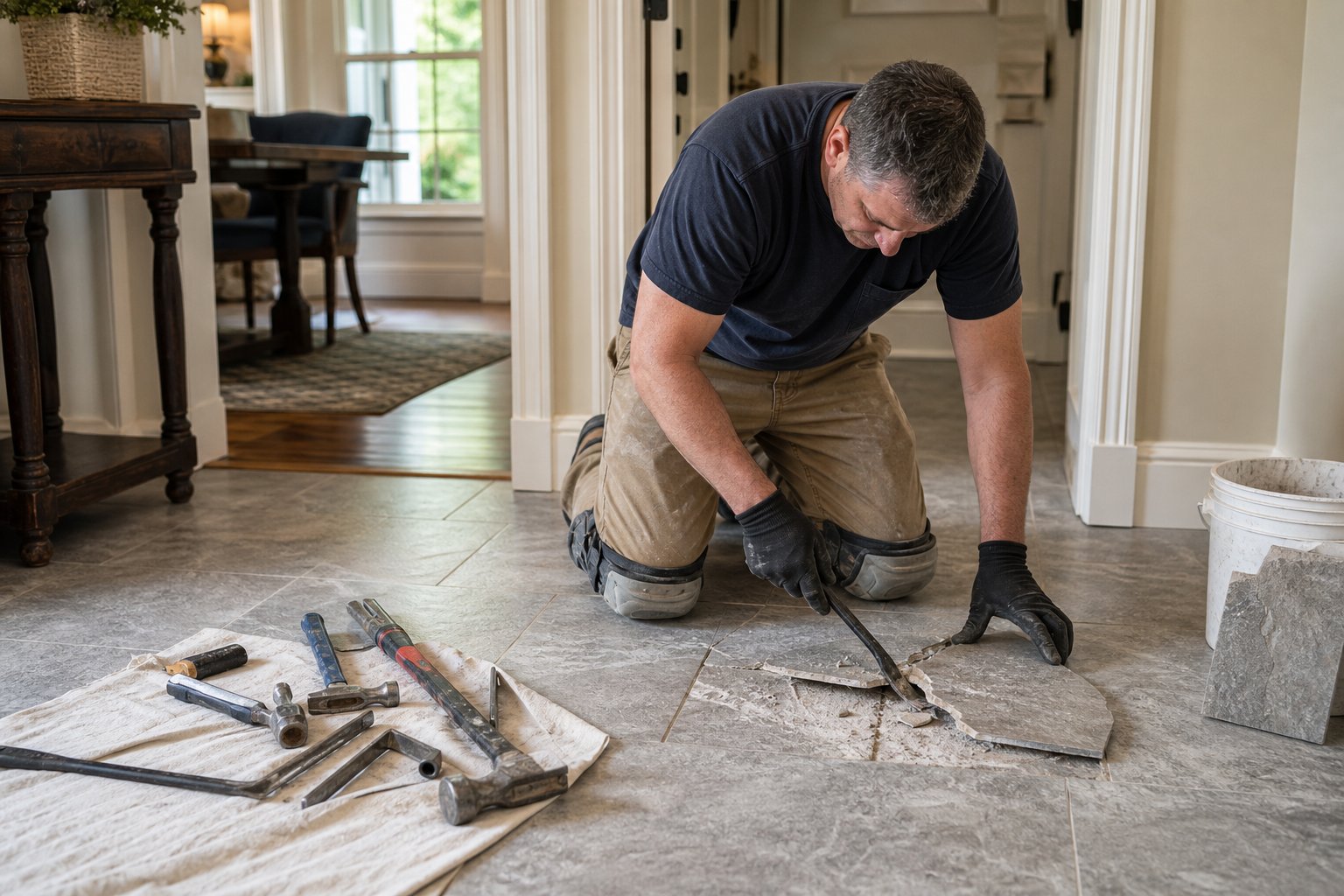
- Hollow or loose tiles: A tile that sounds hollow when tapped has lost adhesion to the substrate. Left unaddressed, it will crack under foot traffic and allow water infiltration behind the wall or under the floor.
- Grout discoloration that doesn’t clean up: May indicate mold growth behind the wall — especially in shower surrounds. This warrants professional inspection.
- Caulk cracking at transitions: The caulk joint where tile meets the tub, shower pan, or countertop flexes more than grout can handle. Caulk (not grout) belongs at all changes of plane. When it cracks, water enters. Reapply silicone caulk promptly.
For any repair beyond simple caulk replacement, Milford Mills provides repair and restoration services throughout Chester County, including West Chester, Exton, Downingtown, and Phoenixville. Contact us for an assessment.
Frequently Asked Questions
How often should I seal my tile grout?
For floor grout in Chester County homes: reseal every 1–2 years in high-traffic or wet areas (kitchen, bathroom). Wall tile in dry areas can go 2–3 years. New installations should be sealed 48–72 hours after the grout cures.
Can I use vinegar to clean my tile floors?
Not recommended. Vinegar is acidic and will etch grout over time, weakening the surface and making it more susceptible to staining. It should never be used on natural stone tile. Use a pH-neutral tile cleaner instead.
My grout has turned dark/black in the shower. What do I do?
Dark grout in showers is typically mold or mildew. Try a deep clean with hydrogen peroxide paste first (test on an inconspicuous spot). If the discoloration persists or the grout is deteriorating, it may need professional cleaning or regrout. Mold that recurs quickly can indicate water behind the tile wall — worth a professional look.
How do I know if a tile is loose?
Gently tap the tile with your knuckle or a rubber mallet. A solid tile sounds dense; a hollow tile sounds like a drum. Loose tiles need to be re-adhered promptly — especially on shower walls or floors where water can get behind them.
What’s the best mop for tile floors?
A flat microfiber mop is best for most tile floors — it cleans effectively without saturating grout joints. Avoid string mops and sponge mops, which push dirty water into grout lines. For natural stone, use a dedicated stone mop with a barely-damp pad.
Milford Mills Tile installs and restores tile throughout Chester County, PA — from kitchen backsplashes to full bathroom renovations. Have a tile question or need a repair? Reach out today — we’re happy to take a look.
Related Posts