Chester County's historic homes are among the most beautiful in the Philadelphia region — Federal-era…
Penny Tile & Mosaic Tile: A Chester County Homeowner’s Guide
When Chester County homeowners think about tile, they often picture large-format porcelain slabs or classic subway tiles. But there’s a smaller option that has been charming bathrooms, kitchens, and mudrooms for over a century — and it’s having a serious renaissance: penny tile and mosaic tile.
These small-format tiles pack an outsized design punch. Whether you’re drawn to the timeless grid of white penny rounds, the graphic boldness of a Moroccan mosaic, or the natural beauty of a marble chip pattern, penny and mosaic tiles offer a level of design flexibility that larger tiles simply can’t match. At Milford Mills Tile, we install mosaic and penny tile throughout Chester County, Delaware County, and the surrounding Main Line communities — and we’re here to help you understand your options.
What Are Penny Tiles?
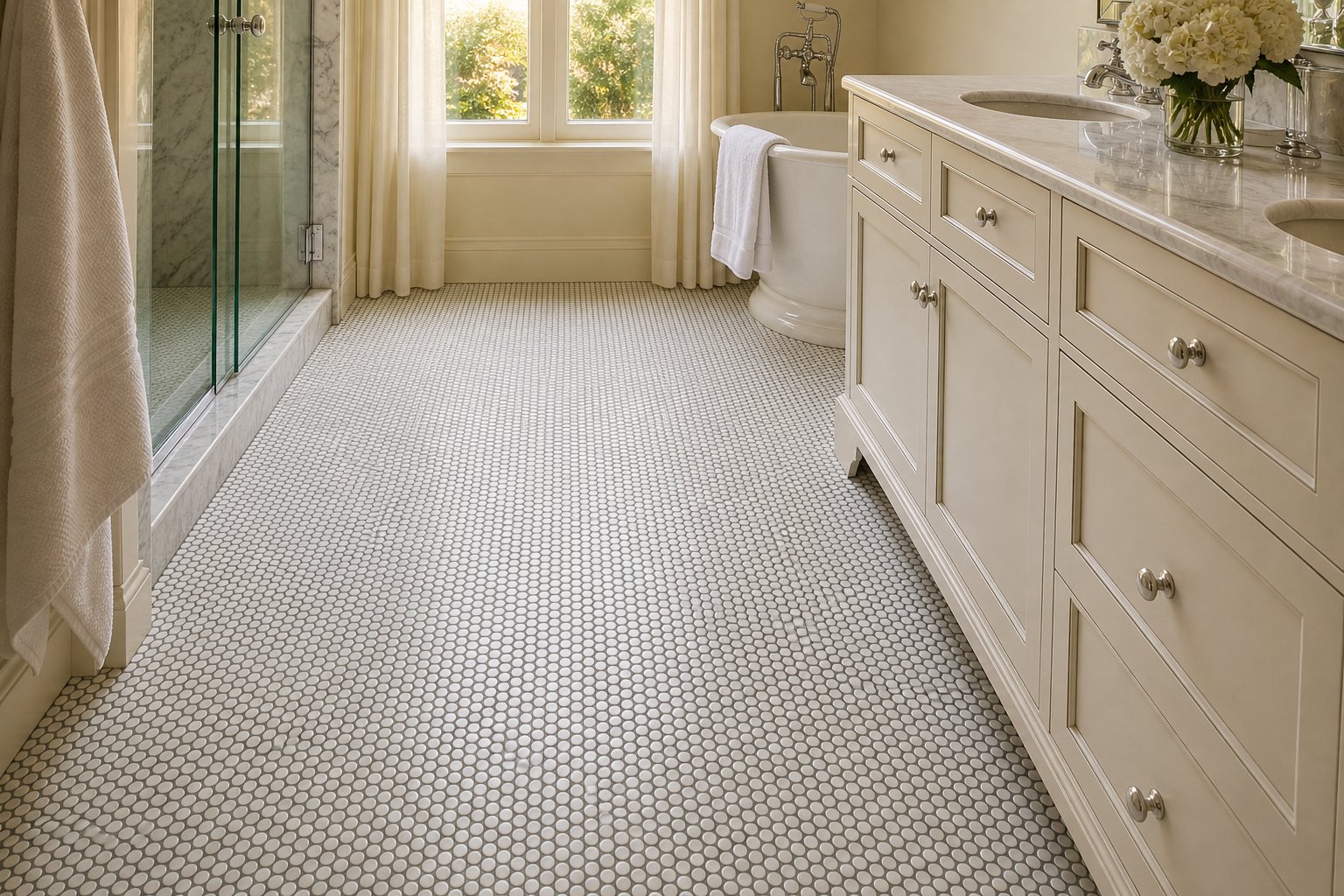
Penny tiles are small, circular tiles — typically about 7/8 to 1 inch in diameter — named because they’re roughly the size of an old penny. They’re almost always sold on mesh-backed sheets (usually 12″ × 12″) that hold dozens of individual coins in place, making installation manageable despite the tiny size of each piece.
Classic penny tiles are ceramic or porcelain, but you’ll also find them in natural stone (marble, travertine), glass, and even metal finishes. The traditional look is a simple white or off-white penny on a white or grey grout grid — clean, classic, and endlessly versatile. But modern penny tile comes in every color imaginable, from matte charcoal to soft sage to deep navy.
What Are Mosaic Tiles?
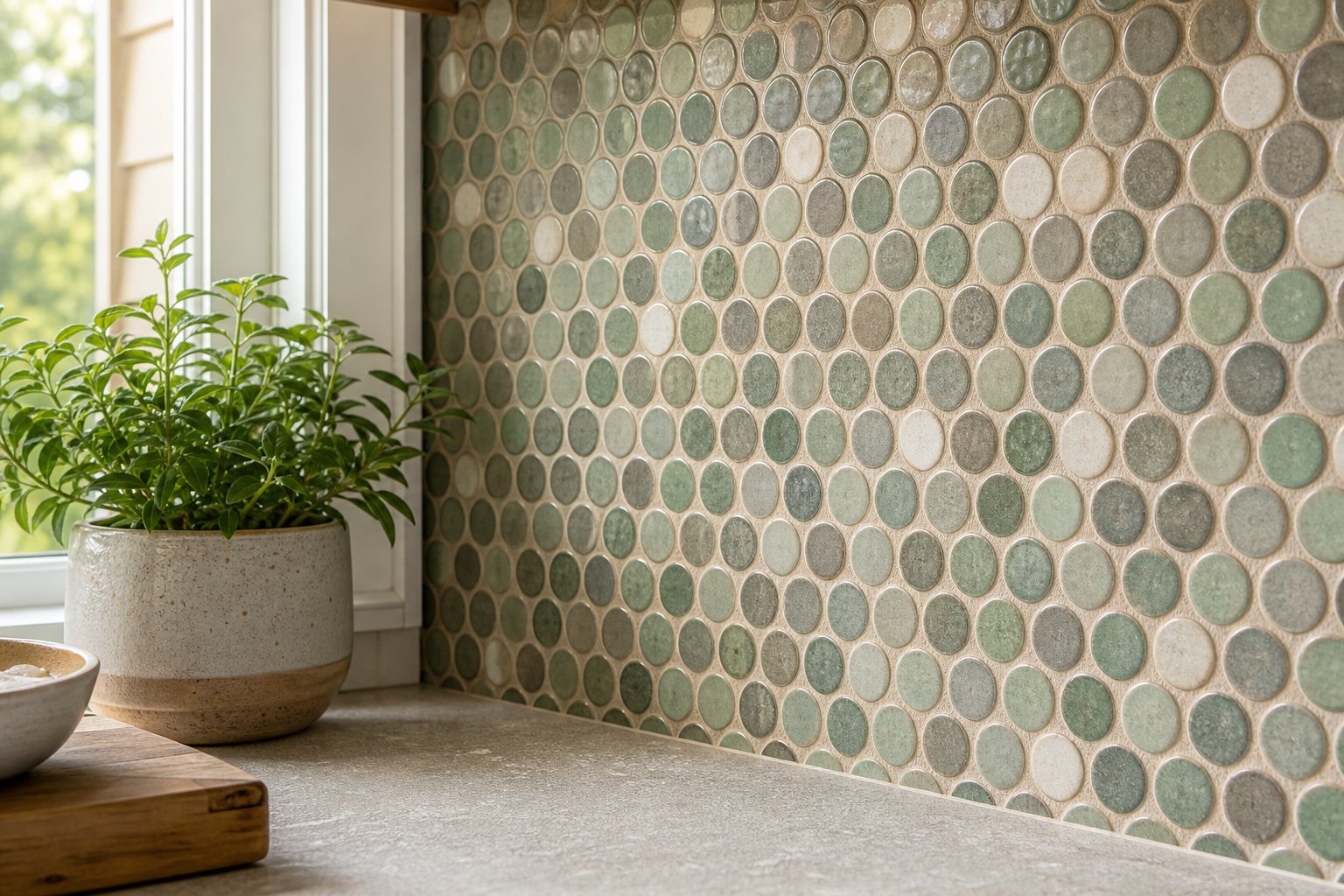
Mosaic tile is a broader category: any tile installation made up of small individual pieces arranged to form a pattern or image. Penny tile is technically a type of mosaic, but the term usually describes:
- Glass mosaics — small square or irregular chips of glass, often iridescent or jewel-toned, popular for pool liners and shower accents
- Stone mosaics — natural marble, travertine, or slate chips arranged in random or geometric patterns
- Ceramic and porcelain mosaics — small squares (typically 1″–2″), hexagons, arabesque shapes, or irregular pieces
- Mixed-material mosaics — combinations of stone, glass, and metal for high-end feature walls and niches
Like penny tile, most mosaics come factory-mounted on 12″ × 12″ mesh sheets for easier installation.
Chester County Pro Tip: Penny tile and mosaic tile require significantly more grout work than large-format tile because of the high tile-to-grout ratio. The right grout color is a design decision as much as a technical one — it can make your mosaic pop or blend seamlessly. Ask your installer to mock up a grout color sample before you commit.
Where Penny Tile Works Best in Chester County Homes
Bathroom Floors
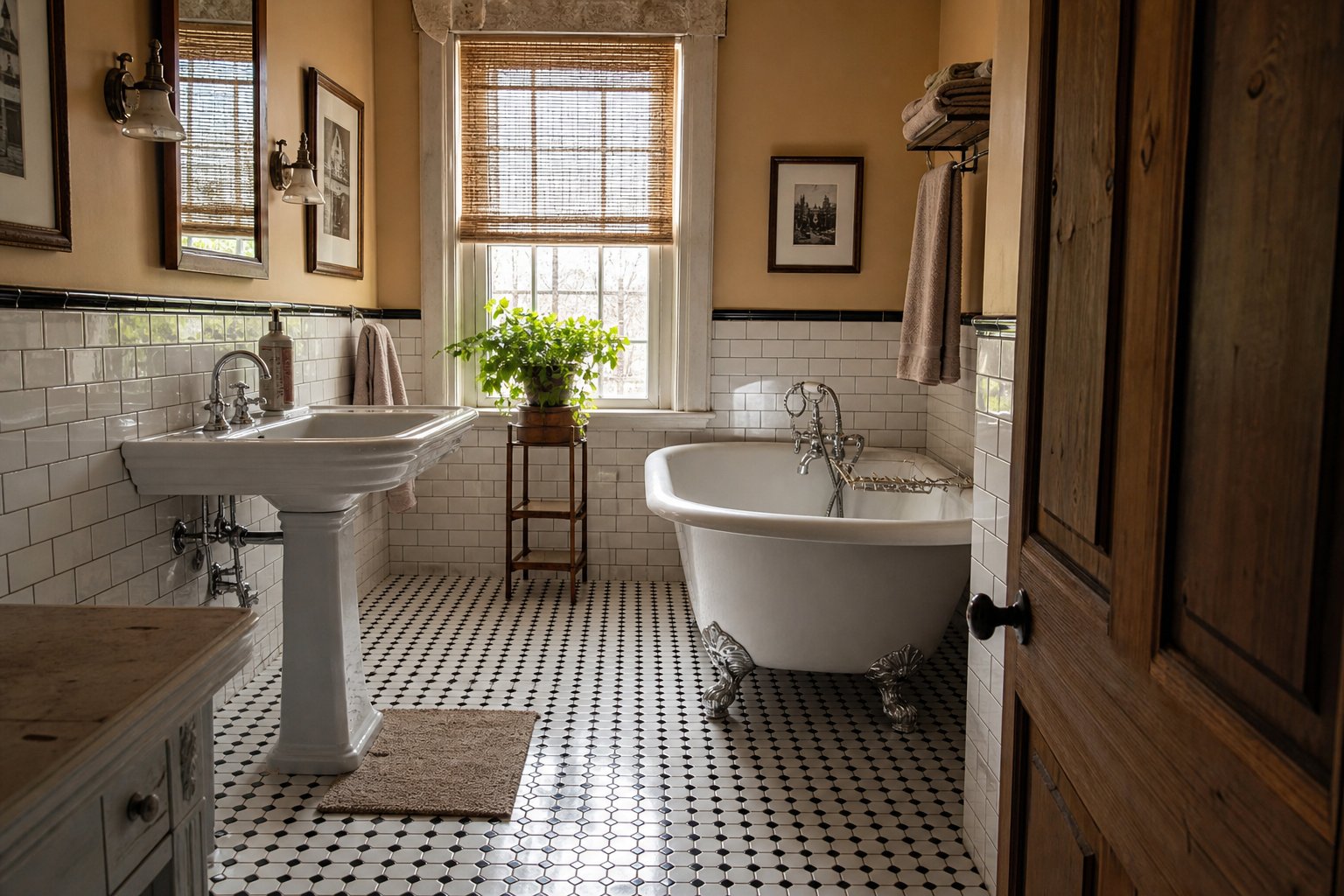
The bathroom floor is where penny tile earns its legendary status. The small size creates a naturally slip-resistant surface — more grout lines mean more friction — which is why classic penny tile became the standard for bathroom floors in the early 20th century. You’ll still find it in beautifully restored Victorian and Craftsman homes throughout West Chester, Malvern, and Phoenixville.
For modern installations, we recommend:
- White porcelain penny rounds with white grout for a clean, spa-like look that photographs beautifully
- White penny tile with dark charcoal grout for graphic contrast that hides dirt better between cleanings
- Mixed-tone penny mosaics in warm greys, creams, and taupes for a more organic, handcrafted look
Shower Floors and Niches
Because penny tile and mosaic tile conform to curved surfaces and grout tightly, they’re excellent choices for shower floors where slope and drainage need to be maintained. The multiple grout lines grip your feet, and the small tile format adapts naturally to the slope toward the drain.
Shower niches — those recessed shelves in the shower wall — are a perfect canvas for a mosaic tile accent. Using a complementary mosaic in the niche while keeping large-format tile on the walls is a subtle but effective design move that elevates an otherwise standard shower.
Kitchen Backsplashes
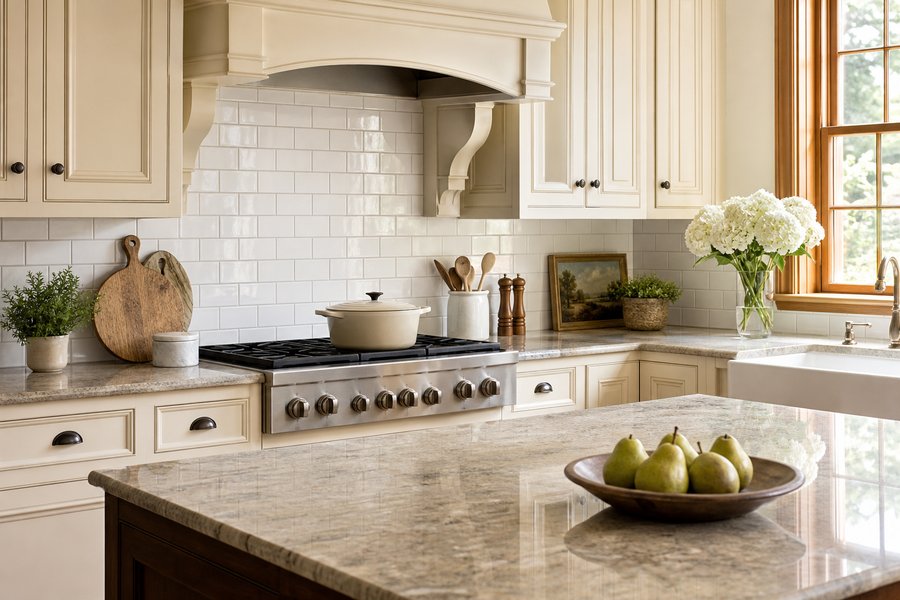
Mosaic tile dominates the kitchen backsplash world for good reason: the variety is endless, and small tiles can create patterns and gradients that single large tiles cannot. A popular approach in Chester County kitchen renovations is to run a neutral subway tile across most of the backsplash and use a mosaic tile as the focal-point “statement” section — centered behind the range, for example.
Glass mosaic backsplashes remain popular for their light-reflecting qualities, especially in north-facing kitchens that could use a brightness boost. Mixed stone-and-glass mosaics in warm greens, golds, and creams work beautifully in Chester County’s many historic stone homes with warm wood cabinetry.
Entryways and Mudrooms
The entry floor is a prime spot for mosaic tile. Classic black-and-white hexagonal mosaic — another close cousin of penny tile — has been used in Victorian entry halls for over 150 years and never looks dated. For modern farmhouse and transitional-style homes, a grey-and-white penny tile entry is both practical (durable, easy to clean) and visually welcoming.
Laundry Rooms and Powder Rooms
Penny tile is particularly effective in smaller rooms where you want to add character without overwhelming the space. A powder room floor in penny tile — perhaps in a soft sage, blush, or warm grey — can transform a utilitarian space into a design moment guests will notice and remember.
Mosaic Tile as an Accent: The Feature Wall
You don’t have to tile an entire floor or wall in mosaic to get its impact. Some of the most beautiful tile work we do involves mosaic tile used strategically:
- A mosaic band running horizontally around a bathroom at chair-rail height
- A mosaic medallion centered in a stone floor entry
- A full mosaic feature wall behind a freestanding tub
- A glass mosaic liner running along the waterline of a pool surround
These accent applications let you get the texture and artistry of mosaic without the cost of covering large surface areas. They also let you introduce color and personality in spaces where the overall design is otherwise restrained.
Natural Stone Mosaic: A Chester County Favorite
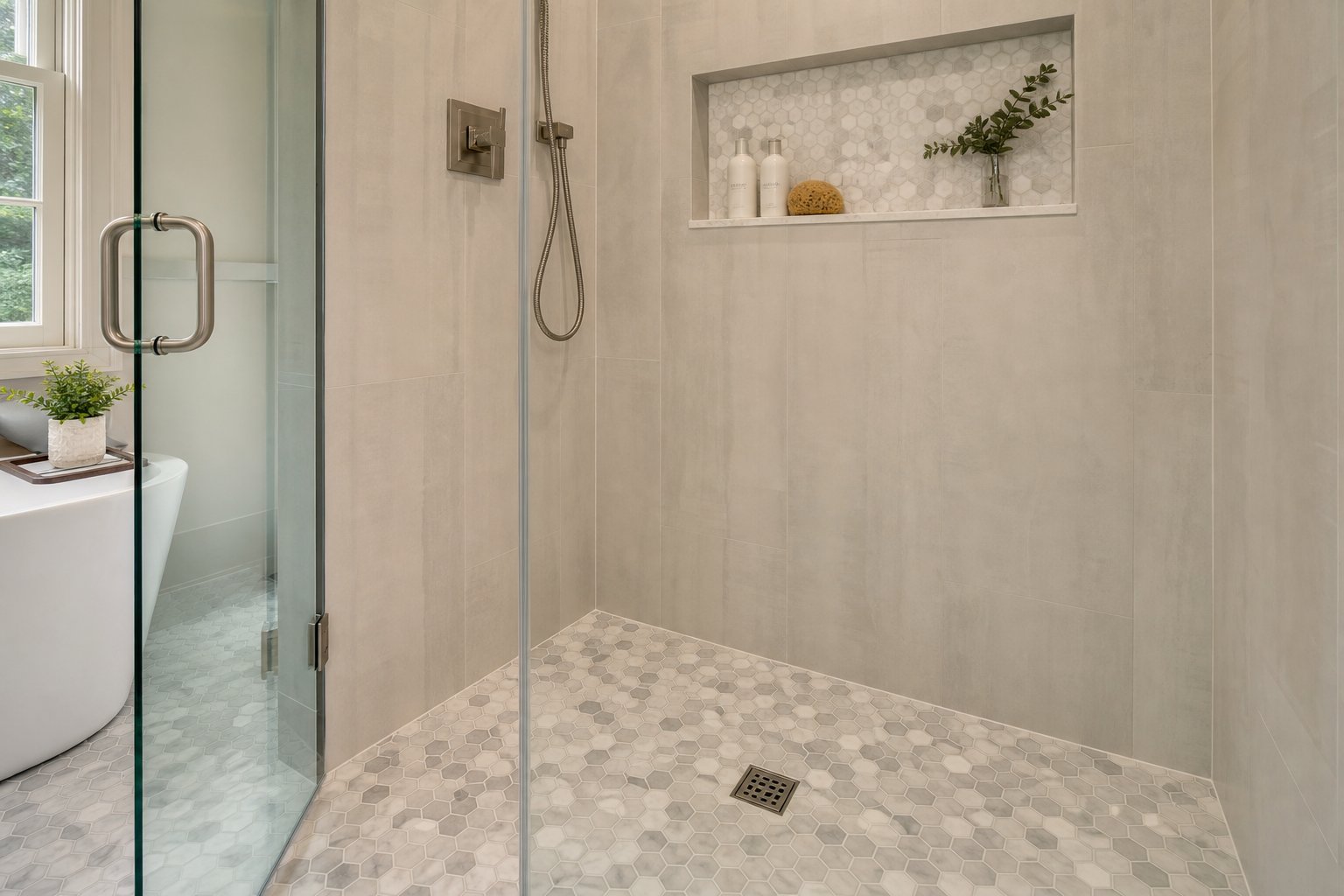
Chester County’s historic stone homes have a natural affinity for stone mosaic tile. Marble mosaic in particular — whether classic Carrara white, warm emperador brown, or sophisticated Calacatta — reads as timeless and appropriate for the region’s architectural aesthetic.
Natural stone mosaic does require more maintenance than porcelain: stone is porous, absorbs moisture if unsealed, and requires pH-neutral cleaners to avoid etching. But for the right project — a master bath, a primary shower, an entryway in a historic home — the natural warmth and variation of stone mosaic is worth the upkeep.
Installation Considerations
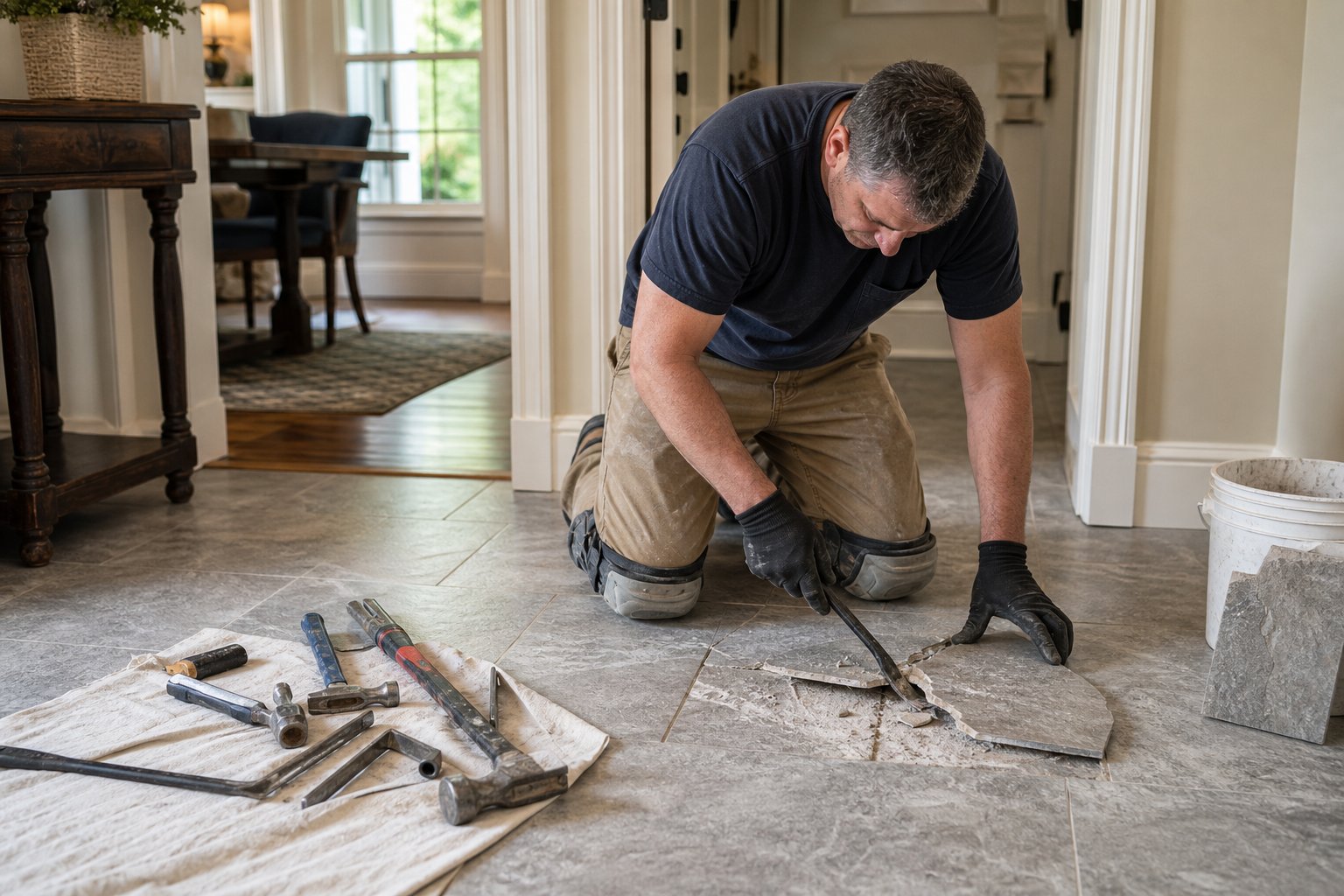
Penny tile and mosaic tile are beautiful, but they’re more labor-intensive to install than large-format tile. Here’s what homeowners should know before starting a project:
- Substrate perfection matters more — small tiles telegraph substrate imperfections more than large tiles. A flat, properly prepared substrate is non-negotiable.
- Grouting is time-consuming — the surface area of grout joints is much higher with small tiles. Budget more time and labor for grouting and cleanup.
- Cutting mesh-backed sheets — installers need experience cutting sheets cleanly at borders and transitions. Poorly cut edges are one of the most common quality issues in DIY mosaic work.
- Grout sealing — unsanded grout (used for tight mosaic joints) should be sealed, especially on floors and in wet areas.
- Level setting — each individual tile in a mosaic sheet can sit slightly differently. Experienced installers embed the sheets with consistent pressure and use the right trowel notch to ensure a uniform surface.
If you’re considering a mosaic tile project, working with a professional installer who has hands-on experience with small-format tile will make a significant difference in the final result. The artistry is in the details.
Cost Expectations
Penny tile and mosaic tile typically cost more per square foot than standard ceramic tile — both for materials and for labor. Material prices vary widely: entry-level ceramic penny tile runs $2–$5 per square foot on mesh, while hand-cut natural stone mosaics can reach $20–$40 per square foot or more. Labor is also higher due to the extra grouting, setting care, and complexity of cuts at borders.
For most Chester County bathroom floor or backsplash projects, plan for mosaic tile to cost 20–40% more than an equivalent project in standard tile. The investment is well worth it for the design impact and the durability of a well-executed installation.
Ready to Explore Penny Tile for Your Chester County Home?
Whether you’re envisioning a classic white penny tile bathroom floor, a bold glass mosaic backsplash, or an intricate stone mosaic entry medallion, Milford Mills Tile has the experience to bring your vision to life. We serve West Chester, Malvern, Wayne, Paoli, Exton, Media, and the surrounding Chester County and Delaware County communities.
Explore our bathroom tile installation services, browse our portfolio of completed projects including mosaic and penny tile work, or reach out to schedule a consultation. Our team is happy to walk you through material options and help you find the perfect tile for your project.
You can also learn more about our full range of tile installation services and the areas we serve across Chester County and the surrounding region.
Related Posts