When Chester County homeowners think about tile, they often picture large-format porcelain slabs or classic…
Vintage Tile Restoration: Preserving Historic Tile in Chester County Homes
Chester County’s historic homes are among the most beautiful in the Philadelphia region — Federal-era stone farmhouses in Malvern, Victorian row homes in West Chester Borough, Craftsman bungalows in Downingtown, and grand Main Line Tudors that have stood for over a century. Many of them share something else in common: original tile that’s still there, waiting to be brought back to life.
Vintage tile — penny hex floors, subway wainscoting, hand-painted fireplace surrounds, encaustic cement kitchen tile — was installed to last generations. And it did. But decades of grout haze, cracked field tiles, outdated sealers, and well-meaning DIY “fixes” can leave these timeless surfaces looking tired rather than treasured.
At Milford Mills Tile, we specialize in restoring and complementing historic tile in Chester County and Delaware County homes. In this guide, we’ll walk you through what’s actually restorable, what needs to be replaced, how to find period-appropriate matches, and how to protect what you’ve recovered for the next hundred years.
Why Vintage Tile Is Worth Saving
Before we talk process, let’s talk value — both financial and aesthetic.
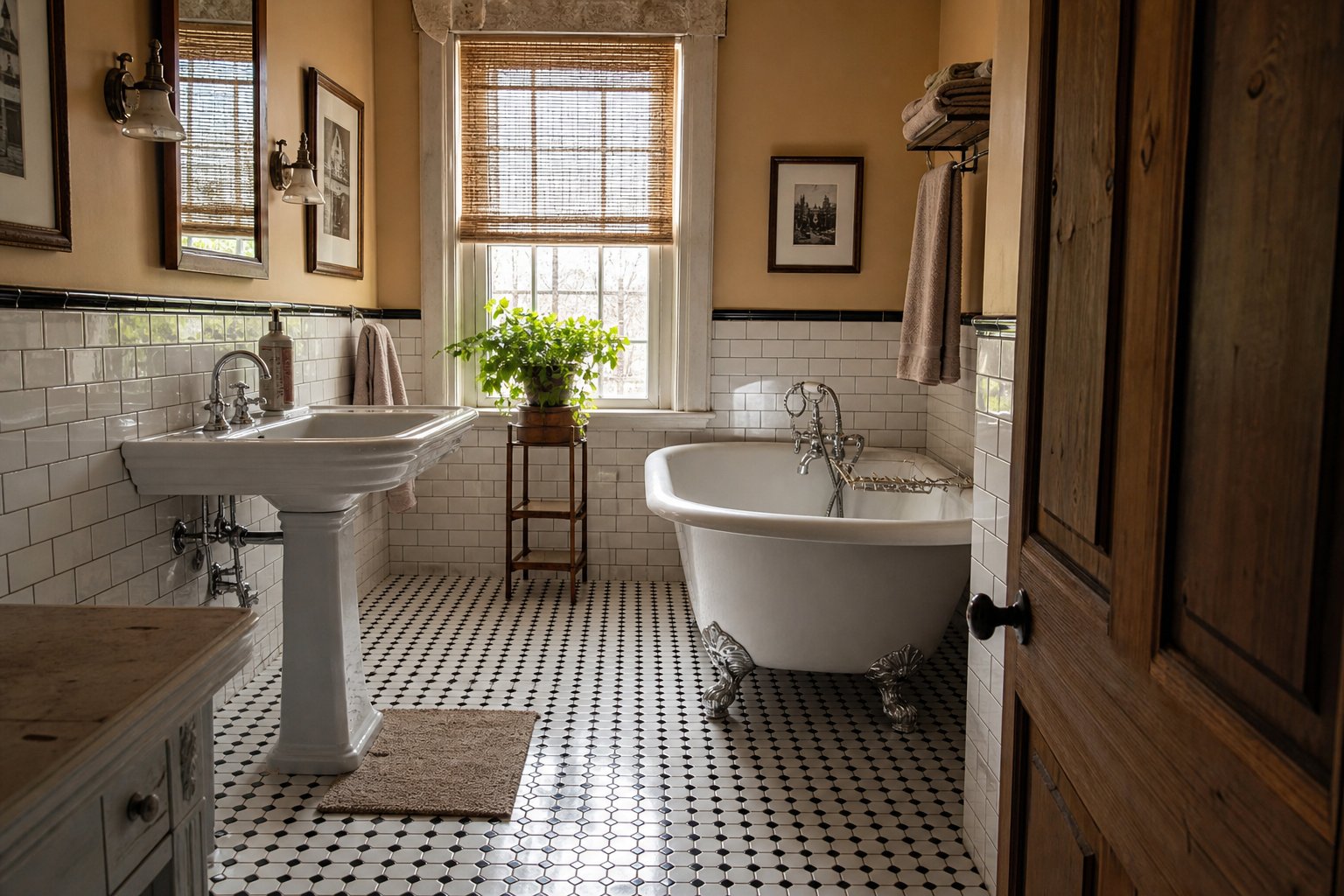
Original tile in a historic home is not a liability. It’s a selling point. Buyers in the Chester County and Main Line markets increasingly seek out authenticity. A period bathroom with original black-and-white hex floors and subway wainscoting — professionally restored — commands a premium that a modern tile renovation simply can’t replicate.
Beyond resale, vintage tile has characteristics that simply aren’t made anymore. True floor-grade penny hex tile from the early 1900s was fired at higher temperatures than most modern equivalents. The clay bodies are denser, the glazes more durable. Original subway tile has subtle dimensional variations and a depth of glaze that modern reproductions approximate but don’t fully match.
Preservation is almost always the right first instinct — but knowing when restoration ends and replacement begins is the expertise you need going in.
Assessing What You Have: A Room-by-Room Guide
Bathroom Floors — Penny Hex and Octagon-and-Dot
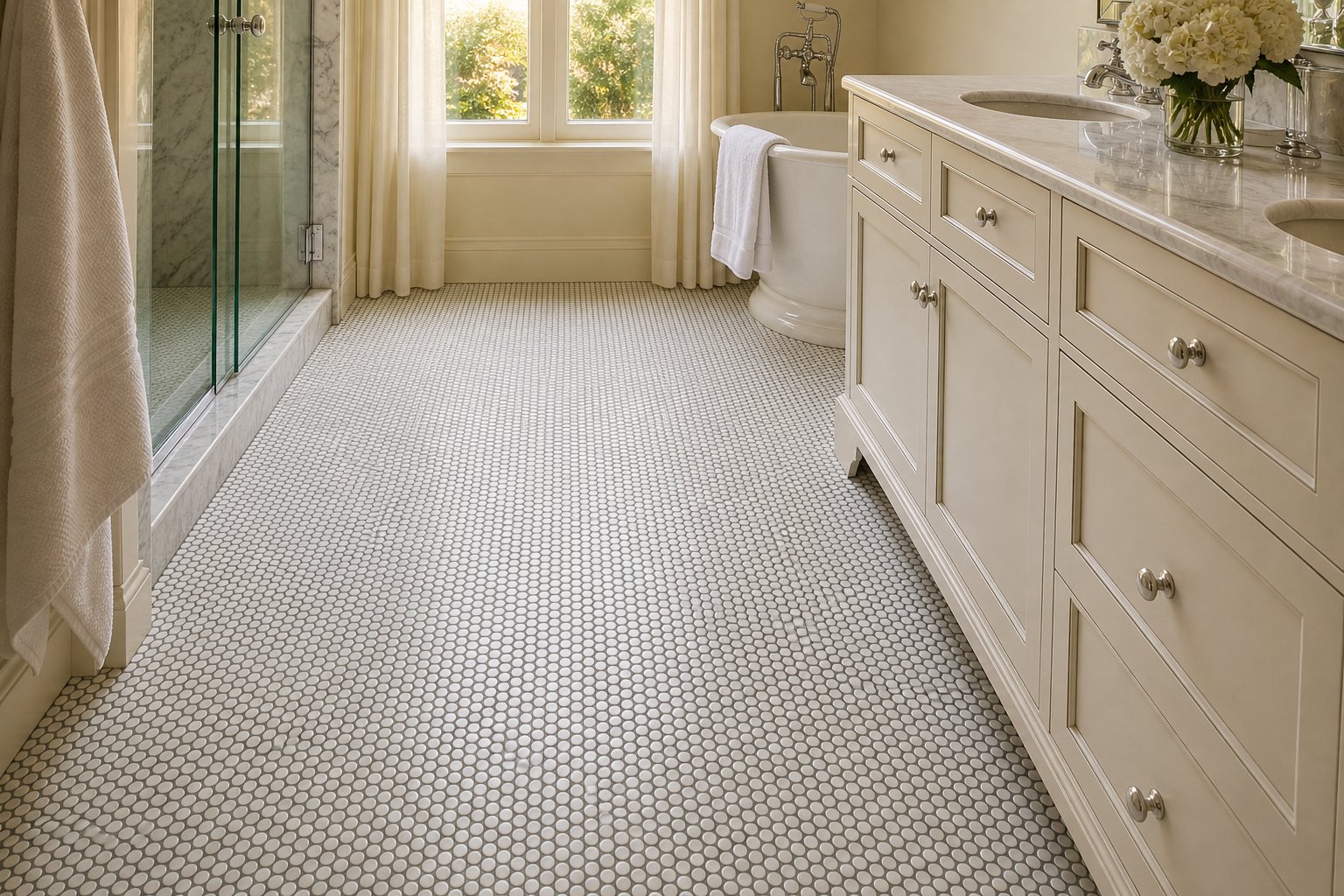
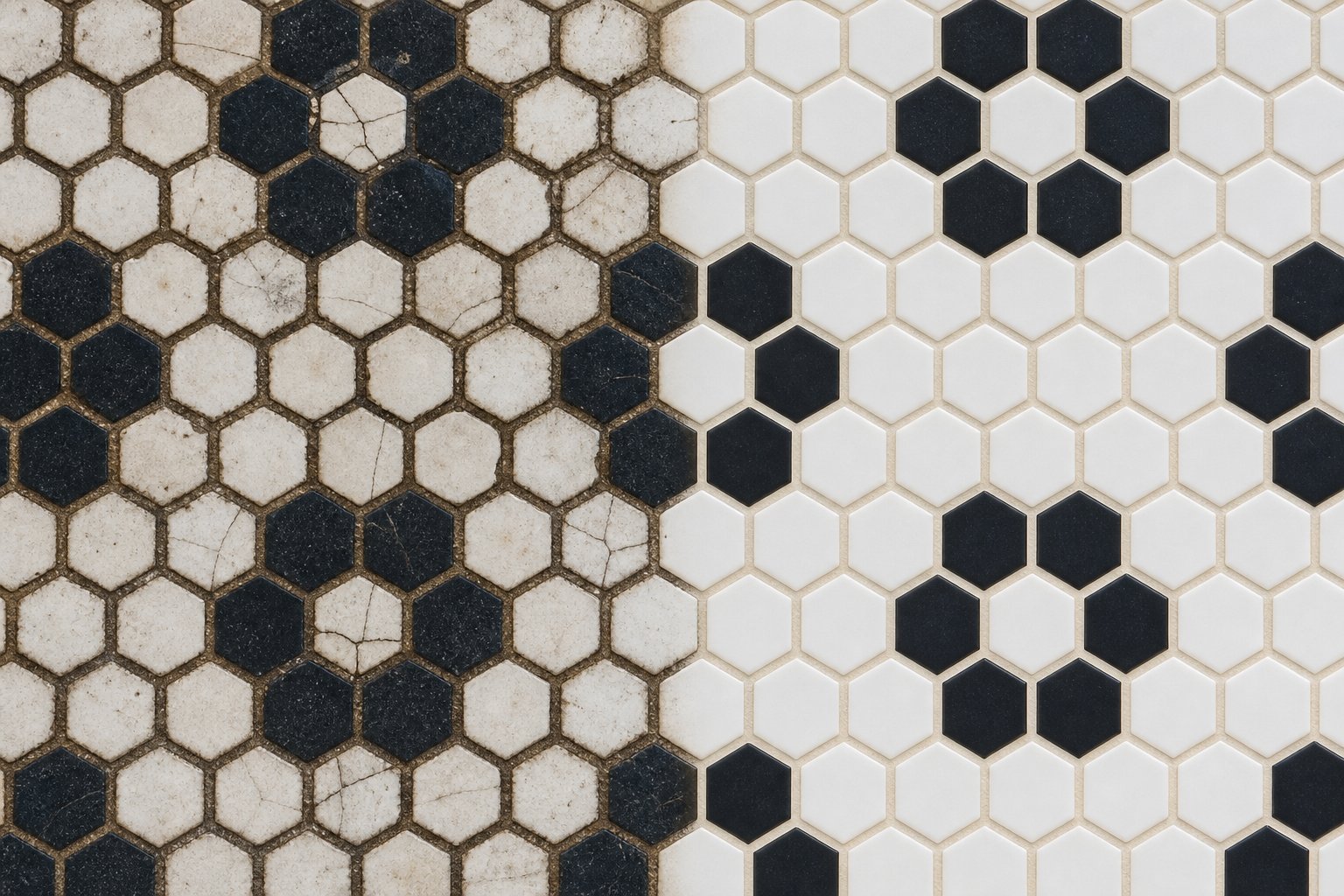
The most common vintage tile in Chester County homes is small-format mosaic flooring. Penny hex (small hexagons, typically 1-inch) and octagon-and-dot (octagonal field tile with small square accent “dots”) were standard in bathrooms from the 1900s through the 1940s.
What’s restorable: Stained or darkened grout (extremely common), surface-level crazing on the glaze, loose tiles that haven’t cracked, mild lippage from subfloor movement.
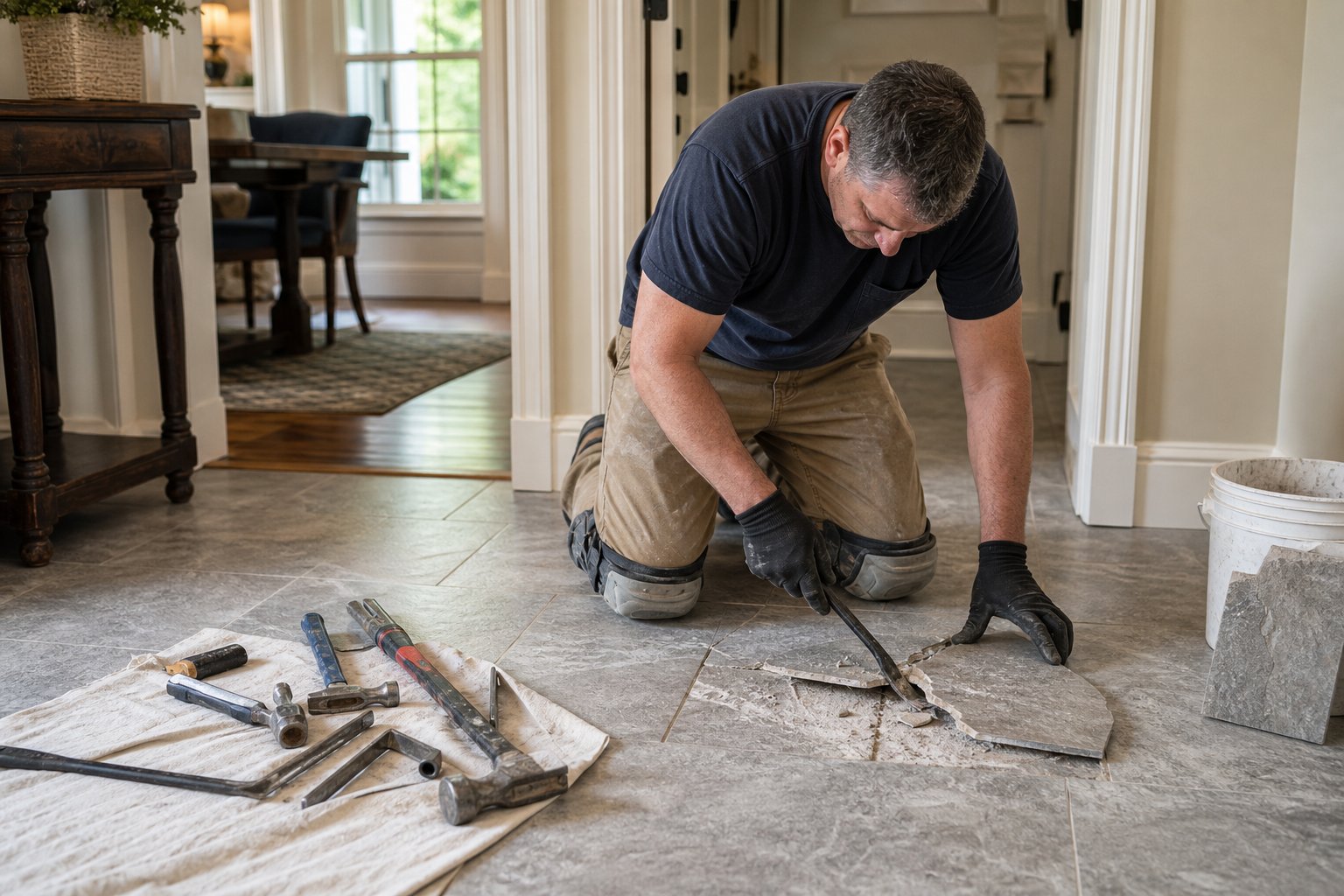
What typically requires replacement: Cracked tiles (the cracks will telegraph through any sealant), missing tiles (need period-appropriate matches), sections that have been lifted or are hollow throughout.
Restoration process: Deep grout cleaning (enzyme cleaners, mechanical scrubbing), grout recoloring or full re-grouting in matching tones, tile adhesive injection for hollow tiles, and application of a penetrating sealer appropriate for glazed ceramic.
Bathroom Walls — Subway Tile and Wainscoting
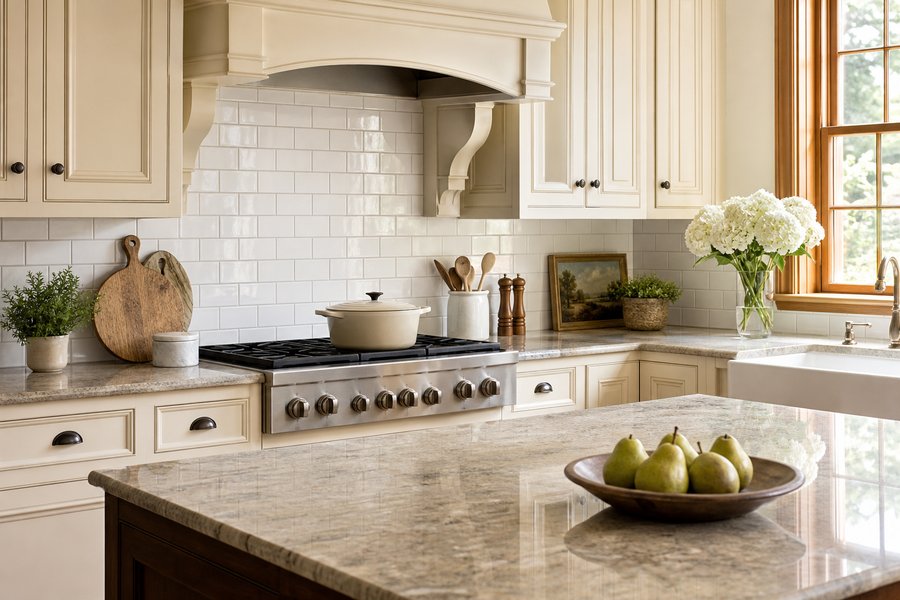
Subway tile predates its current trendy reincarnation by about 100 years. Original subway was typically 3×6 white ceramic with a bright, high-gloss glaze. It was set with very tight joints — sometimes as narrow as 1/16 inch — and grouted in white or cream.
What’s restorable: Yellowed grout (bleaching or re-grouting), minor chips on non-focal tiles, soap scum and hard water buildup, discolored caulk at transitions.
What requires replacement: Tiles with deep chips or cracks in high-visibility areas (above the vanity, at eye level in the shower), tiles where the glaze has fully separated, entire runs that were incorrectly set and are now unstable.
Restoration process: Chemical cleaning, grout removal and re-grouting with period-appropriate color, targeted tile replacement with matched reproductions (more on sourcing below), and recaulking at all plane transitions.
Fireplace Surrounds — Decorative and Encaustic Tile
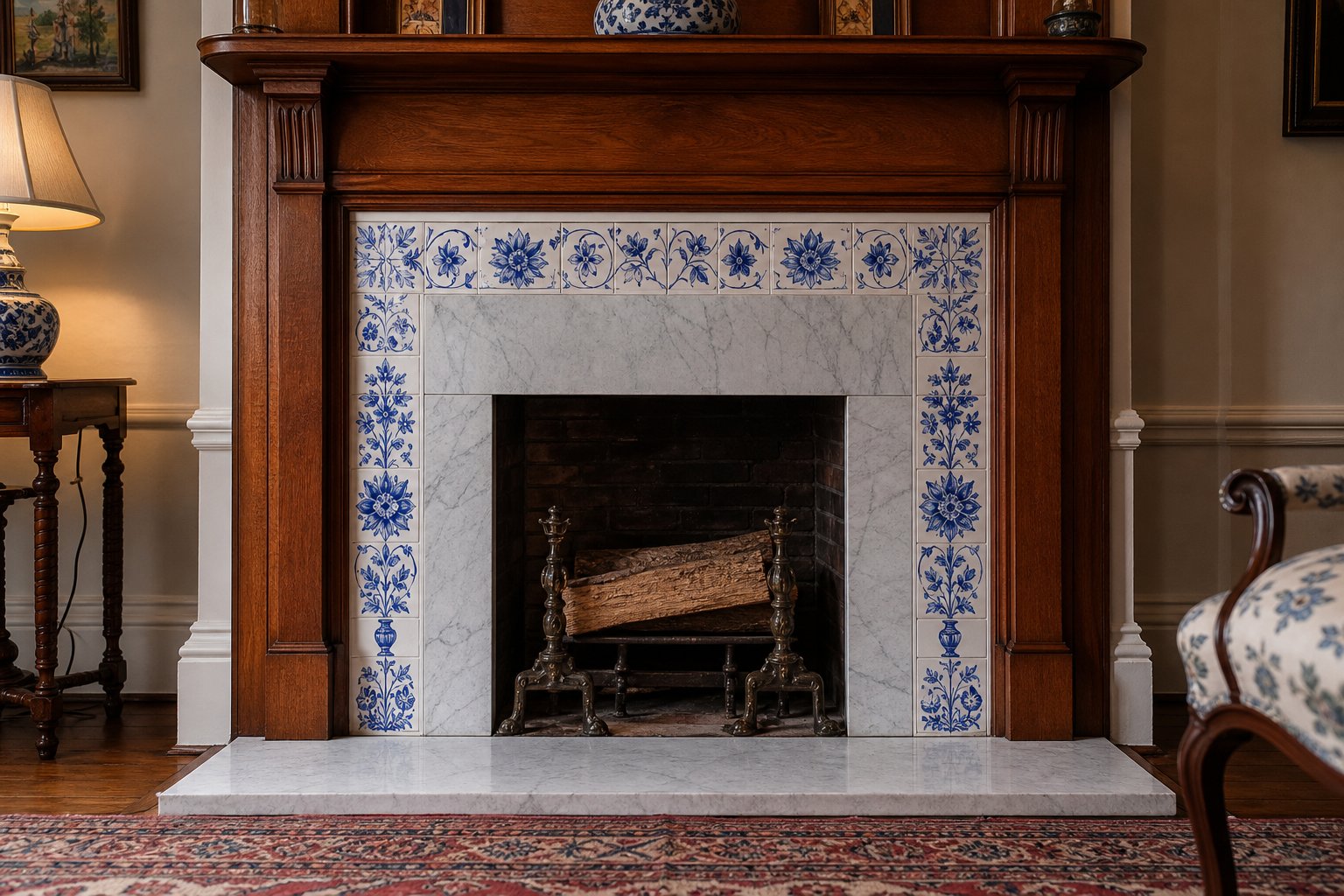
Victorian and Arts & Crafts era homes on the Main Line and in West Chester often feature fireplace tile surrounds that are genuine works of art — hand-painted majolica, relief-molded Arts & Crafts pieces, Delft-inspired blue and white, or simple polished encaustic patterns. These are irreplaceable originals.
What’s restorable: Surface dirt and soot (careful chemical cleaning is essential — harsh products will destroy the glaze), loose tiles not yet cracked, minor mortar deterioration at the perimeter.
What requires a specialist: Cracked decorative tiles are a specialized ceramics conservation problem, not a standard tile installation. For truly irreplaceable hand-painted or molded historic tiles, consult a ceramics conservator before attempting any repair.
Kitchen Floors — Encaustic and Geometric Cement Tile
Pre-WWII kitchens in Chester County farmhouses sometimes feature encaustic cement tile — geometric patterns in earthy reds, blacks, and creams made from colored concrete rather than fired clay. These are porous and require very specific care.
What’s restorable: Worn surface wax, stains, and mild efflorescence. Cement tile should never be sealed with a film-forming sealer — only penetrating sealers formulated for cement. Many “dingy” cement tile floors simply need stripping and re-sealing.
What requires care: Cement tile is soft compared to porcelain and will scratch. Any mechanical scrubbing must use very soft pads. Acid cleaners will dissolve the surface — never use them on cement tile.
Finding Period-Appropriate Replacement Tile
When individual tiles need replacement, matching them is both art and science. Here’s where we look:
Sources for Vintage Tile Matches
- Specialty reproduction manufacturers — Companies like Subway Tile Outlet, Tile Bar, and Stone & Tile Brokers carry faithful reproductions of penny hex, subway, and octagon tile in period sizes and finishes.
- Architectural salvage dealers — Philadelphia has several salvage yards that stock reclaimed tile from demolished rowhouses and historic buildings. Actual vintage tile is the truest match.
- Custom tile studios — For one-of-a-kind decorative tile (fireplace surrounds, hand-painted borders), small ceramics studios can often create matched replacements.
- The homeowner’s attic — Serious. Many original tile jobs were installed with a box of extras left behind. Check storage areas and crawlspaces before sourcing externally.
We bring tile samples and do a physical match comparison in your home’s lighting before committing to a replacement source. A color that looks right under showroom fluorescents can read completely differently under the warm incandescent light of a Victorian bathroom.
The Restoration Process: What to Expect
A professional vintage tile restoration is not a one-day job. Here’s a realistic timeline for a typical Chester County bathroom restoration:
Day 1 — Assessment and cleaning: Full inspection of all tile, grout, and substrate. Deep cleaning of all accessible surfaces. Documentation of damage with photos and measurements.
Day 2 — Tile repairs: Injection of tile adhesive under hollow tiles, targeted replacement of cracked or missing tiles, re-setting any lifted sections once the substrate is confirmed sound.
Day 3 — Re-grouting: Removal of deteriorated grout (oscillating tool with grout rake or carbide grout saw — never a rotary tool that could chip tile), application of new grout in period-matching color, full clean-up of grout haze.
Day 4 — Sealing and finishing: Application of appropriate sealer for tile type, final polish, recaulking at all transitions (floor-to-wall, tub-to-wall, corners).
Total timeline: 4–6 days depending on scope, with some cure time required between phases. A full bathroom restoration — floor, walls, tub surround — typically runs longer than a floor-only project.
Protecting Your Restored Tile
Once restored, original tile deserves a maintenance plan that keeps it looking its best without damaging what you’ve worked to recover:
- pH-neutral cleaners only — Avoid anything with bleach, vinegar, or citrus acid. These will attack grout and dull glazes over time.
- Re-seal annually — Penetrating sealers in high-use areas (floor, shower) should be refreshed once a year. Test water beading to know when it’s time.
- Address chips and cracks promptly — A small crack left unattended will become a missing tile within months in a moisture-rich environment. Early repair is always less expensive than section replacement.
- Never use steam cleaners on vintage tile — The temperature differential and pressure can loosen already-marginal mortar beds and cause tiles to pop. Warm water and a soft mop are the right tools.
When Restoration Isn’t Enough
Sometimes an honest assessment means telling a homeowner that restoration isn’t the right call. If a substrate has failed, if moisture intrusion has compromised the mortar bed, or if damage is widespread rather than isolated, a full removal and reinstall with period-appropriate new tile is often the better investment — and the better long-term outcome.
In those cases, we help select tile that honors the home’s character. There are excellent reproduction options today for penny hex, subway, and octagon-and-dot that will look right at home in a 1910 Chester County bathroom. The goal is always the same: a result that looks like it belongs there.
Ready to Restore Your Historic Tile?
Milford Mills Tile has worked in historic homes throughout Chester County, Delaware County, and the surrounding Philadelphia suburbs. We understand what these homes are — and what they deserve.
Whether you have a Victorian bathroom that needs its original hex floor brought back to life, a fireplace surround with cracked decorative tile, or an entire first floor of original encaustic that’s been covered in linoleum for 40 years, we’d love to take a look.
Contact us for a free consultation. We serve homeowners throughout Chester County and Delaware County, including West Chester, Malvern, Paoli, Wayne, Downingtown, and the surrounding Main Line communities. Browse our portfolio of completed projects to see the quality we bring to every job, or explore our full range of tile installation services. Learn more about the areas we work in on our areas we serve page, or dive deeper into our tile installation process to understand what a professional installation looks like from start to finish.
Related Posts